Project lead: André Rey
Project team: Ayaka Gütlin
Background
The “Reussspitz” wetland is a mire landscape of national importance extending across the cantons of Zug, Aargau and Zurich. Two fen specialists that are decidedly rare north of the Alps still occur here in small numbers: the scabious mining bee (Andrena marginata/EN) and the loosestrife long-horned bee (Tetralonia salicariae/VU). Both the scabious mining bee (ZG, ZH) and the loosestrife long-horned bee (AG) are on the list of species of national priority. Without targeted conservation measures, both species must be expected to disappear from the area before long.
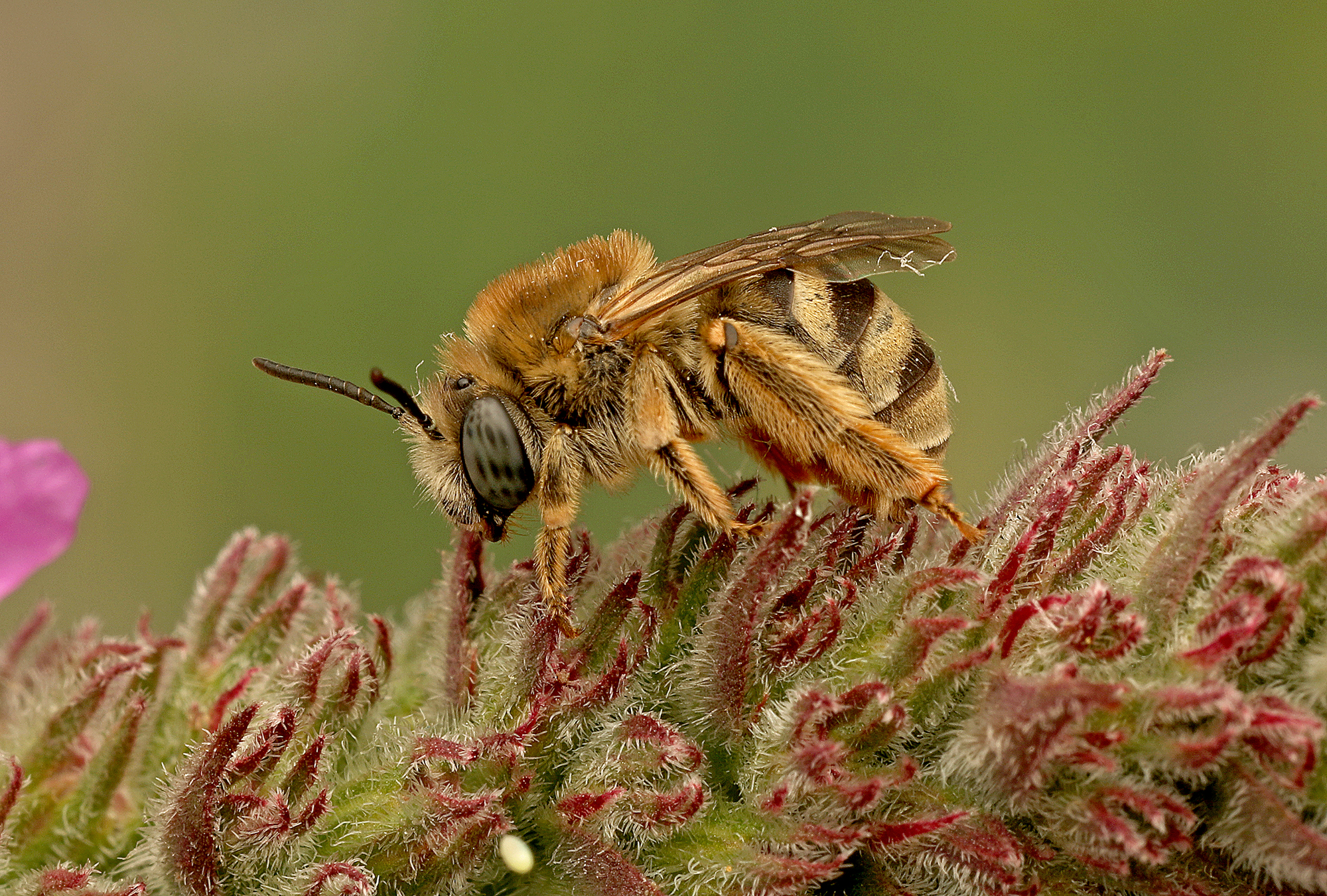
Photo: The female of the loosestrife long-horned bee (Tetralonia salicariae) on the pollen source typical of the species, purple loosestrife (photo: © André Rey).
The problem is presumably that the nest sites of the two species – open sandy ground in dry places – are generally scarce near wetlands, and in the study area very probably lie too far from the most important pollen sources. Both species use pollen plants that occur in wetlands. The presence of such demanding wild bee species indicates a good connection between wet and dry areas (see: Naturschutz und Landschaftspflege Baden-Württemberg, vol. 79: “Ökologische Wechselbeziehungen zwischen trockenen Weinbergen und Feuchtgebieten am Beispiel der Blutweiderich-Langhornbiene (Tetraloniella salicariae)” by Reinhold Treiber).
Project aim
The aim of the project is to secure the survival of the two target species across the whole Reussspitz area in the long term through improvement measures, and to enable them to spread into all three cantons and into the surroundings of the Reussspitz.
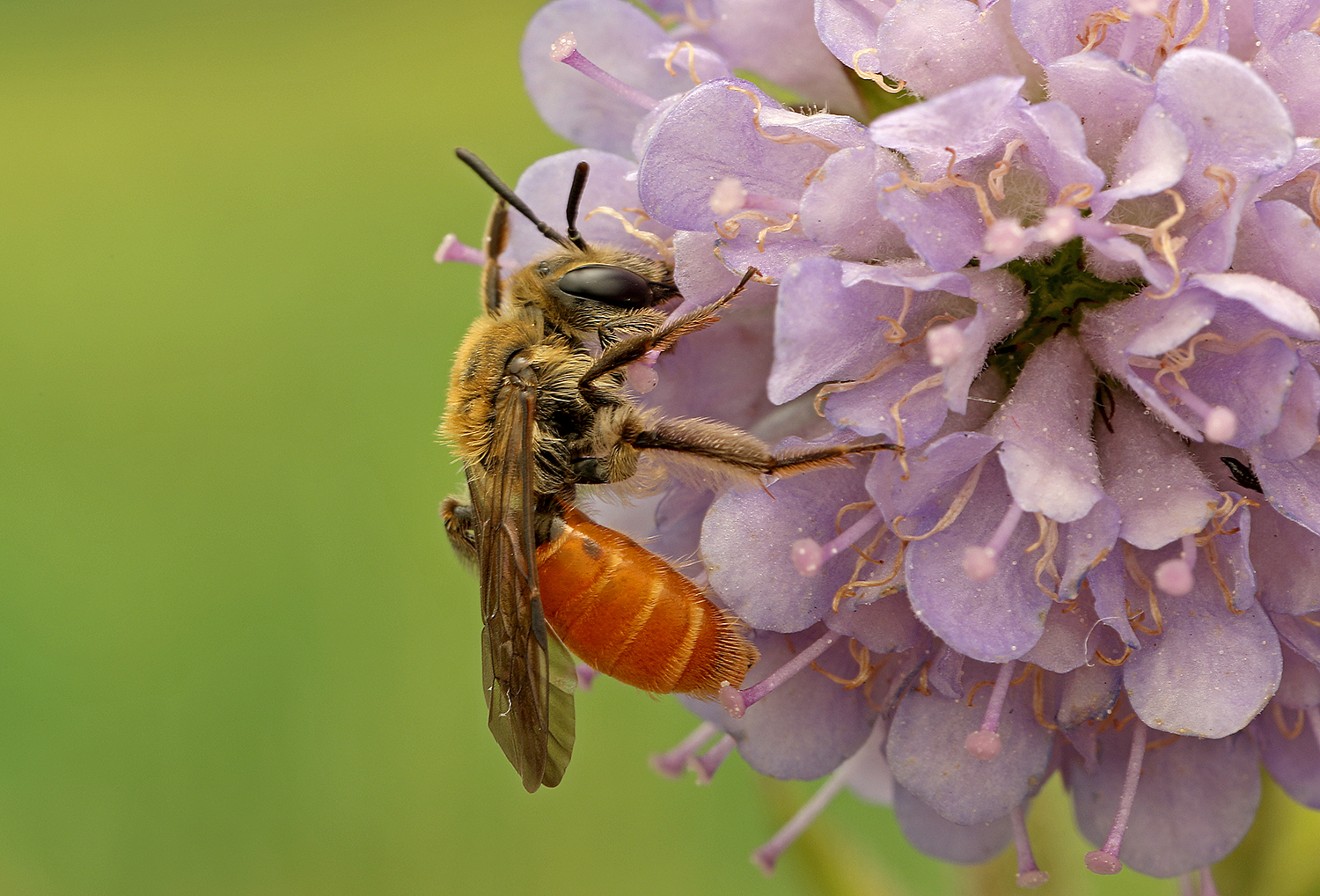
Photo: The female of the scabious mining bee (Andrena marginata), specialised on scabious, on devil’s-bit scabious, one of its obligatory pollen sources (photo: © André Rey).
Work and results 2024
As a basis for planning the measures, the project team analysed the Reussspitz area in summer 2024 through intensive field observation. The aim was to establish the nest sites as well as the pollen sources of the two species, and to make a first estimate of the population sizes of both species in the study area.
Population size and distribution of the target species
In the Zug part of the area, 24 females and 5 males of the scabious mining bee were recorded within some 20 hectares, with no individual found more than 350 m from the nesting site, which was also discovered.
Of the loosestrife long-horned bee, 21 females and 15 males (each at the same time at the nesting site) were observed over an area of more than 1 km². The females were observed almost without exception at the nesting site; only a few individuals were also seen at the pollen sources. The loosestrife long-horned bee was moreover recorded on the Zurich side with one male and on the Aargau side with 3 males – for both of these cantons these are the first records of this species of national priority.
On the basis of our findings so far, we estimate the population of the loosestrife long-horned bee at around 50 individuals and that of the scabious mining bee at around 100.
We regard it as particularly pleasing that the silvery nomad bee (Nomada argentata/EN) was also found at the nesting site of Andrena marginata. It is the threatened cuckoo bee of the mining bee, had been lost from the Reussspitz area for more than 20 years, and will likewise benefit from the improvement measures for its host.
Nest sites
Two experiments were carried out in summer 2024 to find the nest sites of the two species.
1. In June, at two places on the sandy Reuss embankment near the presumed nest sites, three areas of 50 x 50 cm each were experimentally stripped so that open sandy patches free of any vegetation were created.
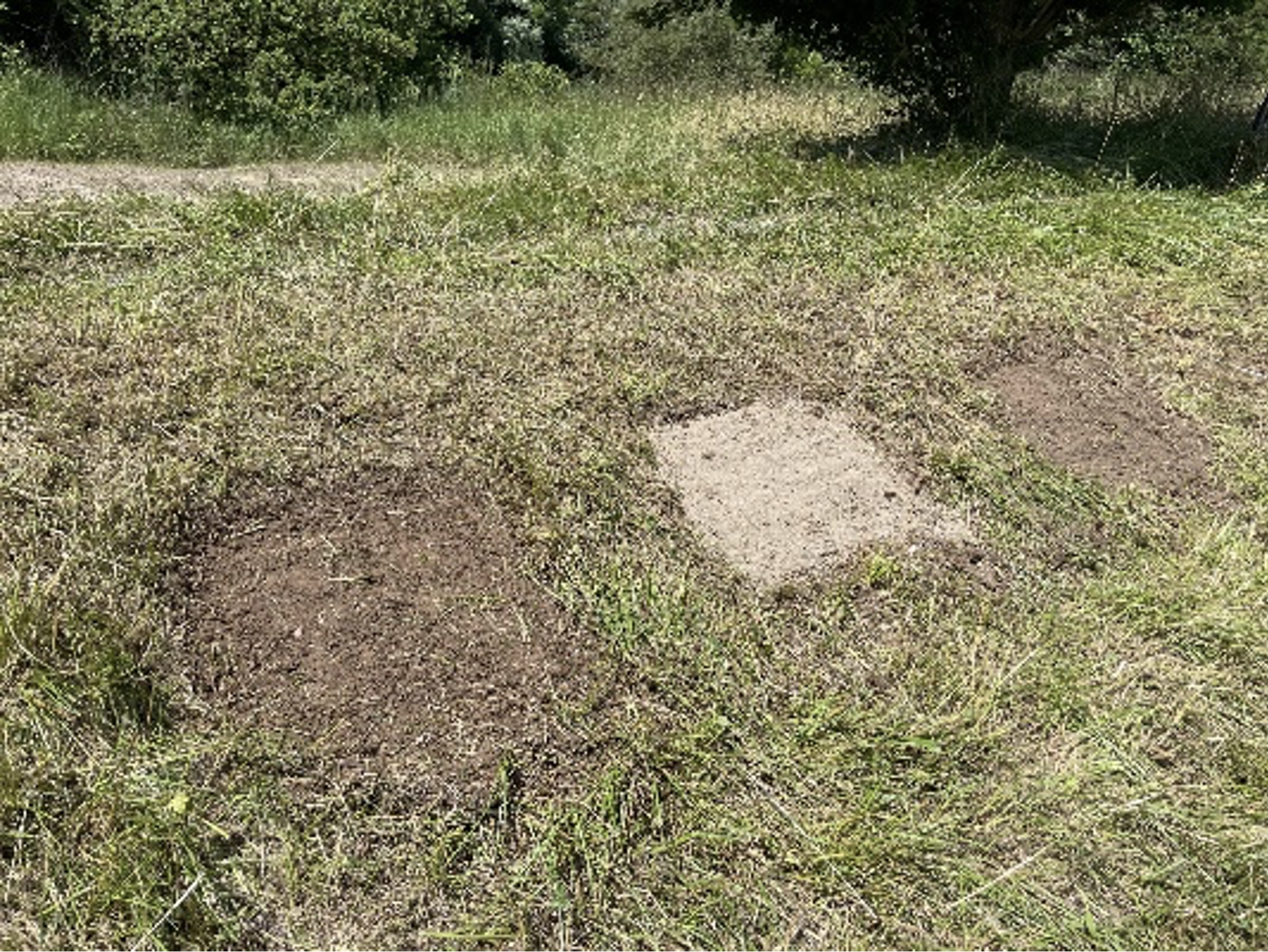
Photo: Stripped sandy patches are intended to serve the two target species as nest sites (photo: © André Rey).
2. In addition, as a lure for the loosestrife long-horned bee, pots each holding 20 flowering purple loosestrife plants were set out at five places along a stretch of just under a kilometre in the same section.
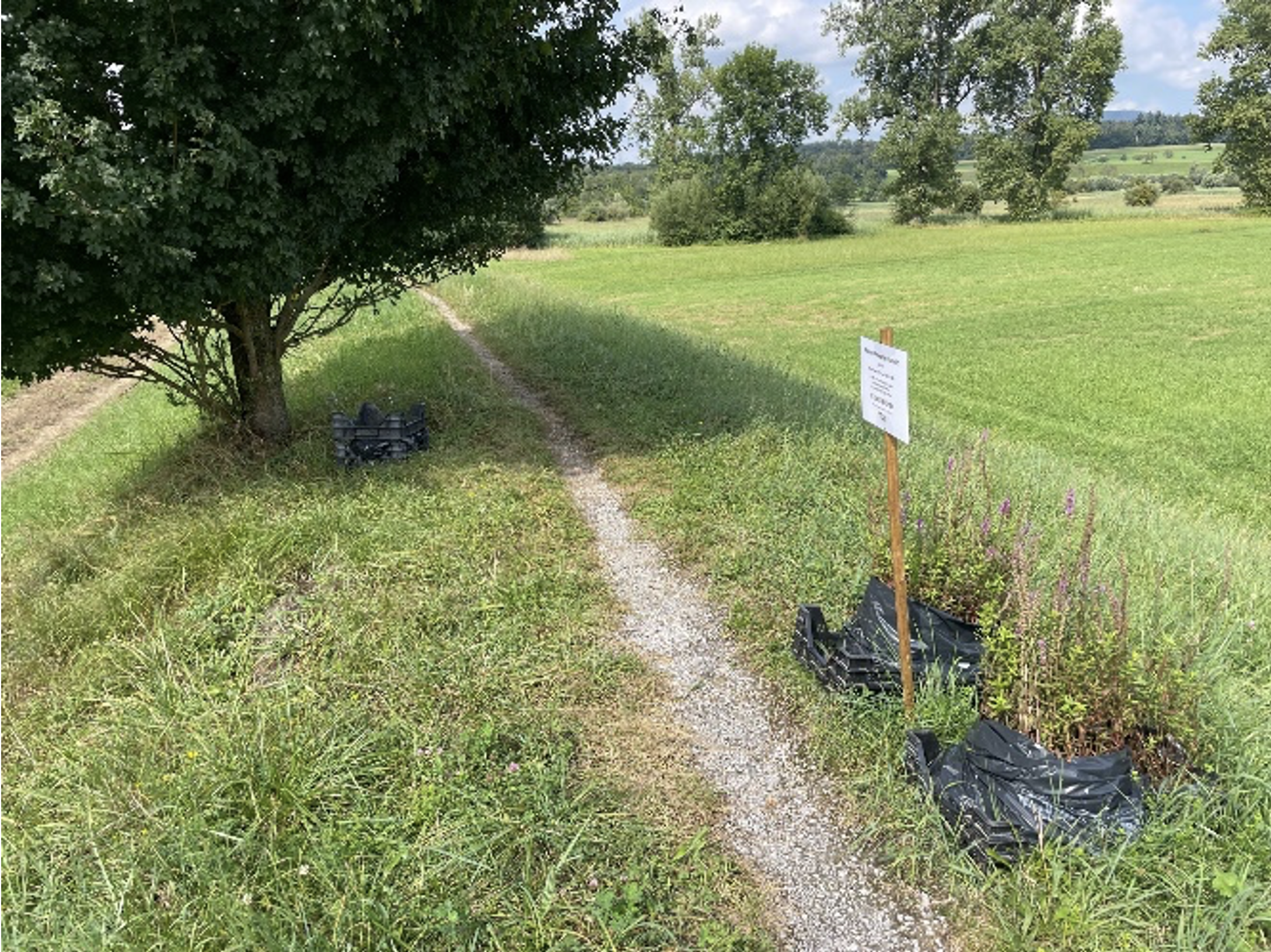
Photo: One of five patches with 20 flowering purple loosestrife plants (photo: © André Rey).
Neither of the two target species was observed at the stripped patches throughout the whole study period. Instead, nesting females of the European beewolf (Philanthus triangulum) appeared at two places – a wasp, that is, specialised as a predator of honey bees. Open sandy patches, which are known to suit the beewolf, therefore appear to answer the needs of our two target species less well.
The potted loosestrife plants were checked for the loosestrife long-horned bee several times a week. On the very first day of the experiment, males of the loosestrife long-horned bee were found at the potted plants that had been set out. The two northernmost loosestrife patches consistently attracted the most individuals. On a rainy day, eight sleeping males were observed at the same time at the northernmost of the five sites. In this way the project team obtained the decisive clues that led to the discovery of nesting sites of both species.
All nest sites found so far lie along a stretch of about 300 metres at the northern end of the sandy flood embankment, which was mown in mid-July and was therefore short-grassed during the flight period of the target species. While the nest sites of the loosestrife long-horned bee show small open, sandy spots between the grass, that of the scabious mining bee was covered, in the gaps between the tussocks, by a layer of moss about 5 cm thick.
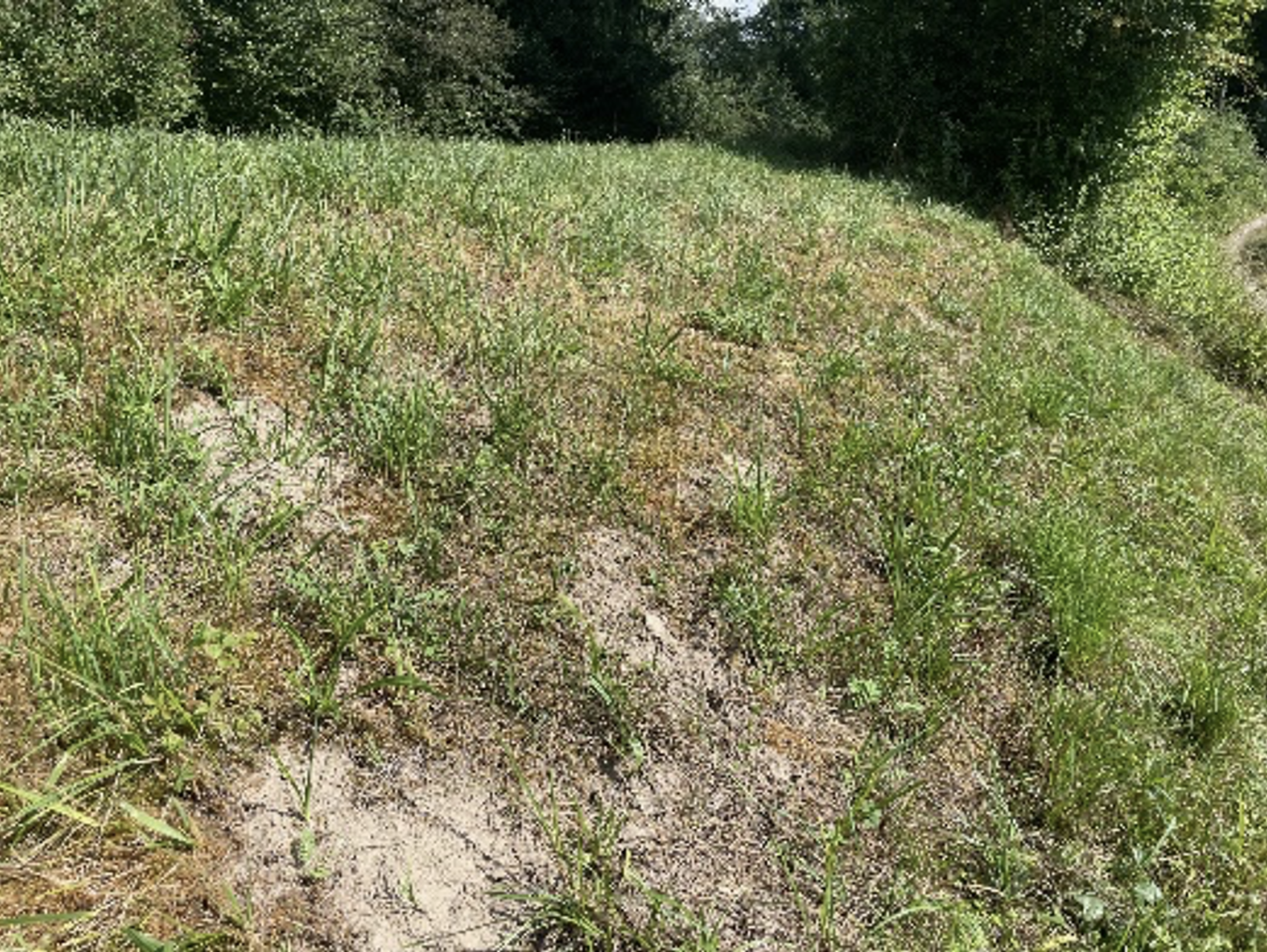
Photo: The nest site of Tetralonia salicariae: the females nest in the open sandy patches between the tufts of grass (photo: © André Rey).
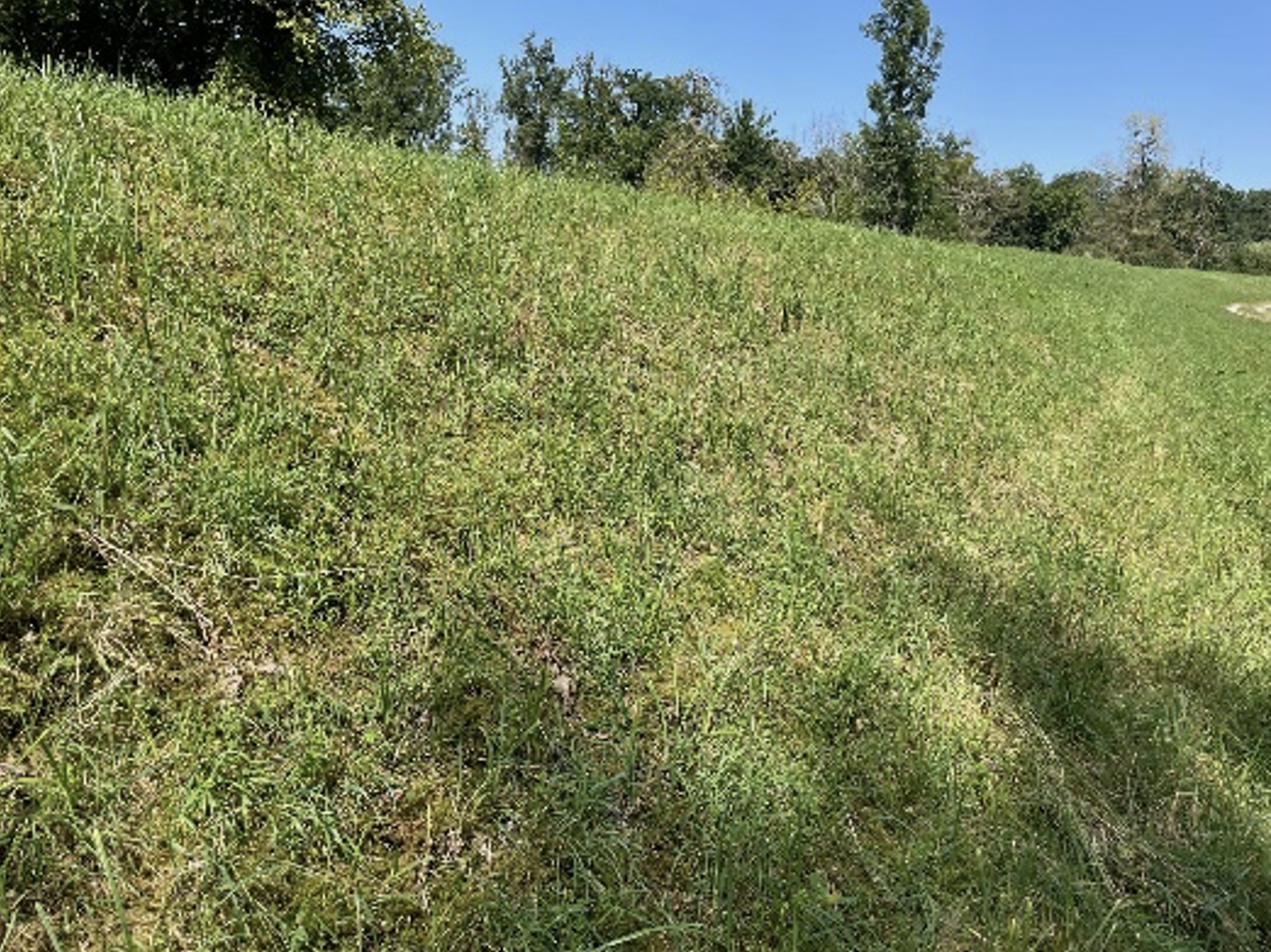
Photo: The nest site of Andrena marginata: a thick layer of moss grows in the gaps between the tufts of grass (photo: © André Rey).
From our observations so far we suspect that, besides the sandy substrate, the height of the surrounding vegetation during the flight period also plays an important part, and that the timing of mowing could therefore have a decisive influence on the quality of the nesting sites.
Pollen sources
Important pollen sources of the two target species were recorded during the field work. Good stands of devil’s-bit scabious are present in the immediate vicinity of the nesting site of the scabious mining bee, whereas larger stands of purple loosestrife were found only from about 700 m away from the nesting sites established for the loosestrife long-horned bee. Parts of the fen closer to the nesting sites held purple loosestrife only at low density.
Areas with potential
As a basis for planning measures in the coming years, several areas with potential for improvement were recorded in the Reussspitz area.
Immediate measure
Bees fly only as far as they absolutely must to reach the pollen they need. As an immediate measure to support the loosestrife long-horned bee, the 100 potted loosestrife plants used for the lure experiment were therefore planted out permanently close to the two nesting sites established. This should at least partly shorten the long foraging flights the females have had to make.
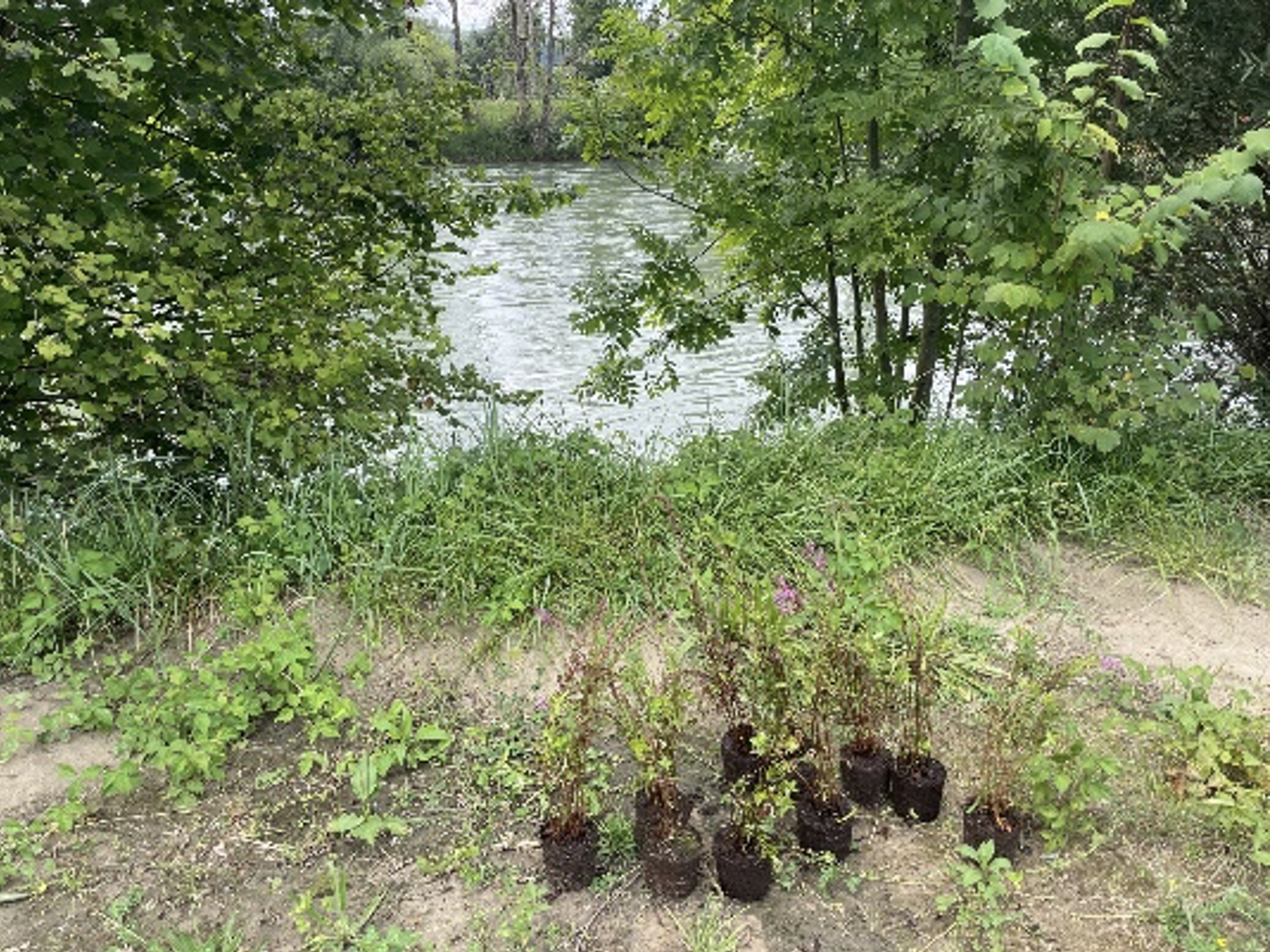
Photo: Planted permanently not far from the nest sites, the loosestrife lure plants serve as an immediate measure to shorten (and make more efficient) the foraging flights of the female long-horned bees (photo: © André Rey).
Funding
This project is supported financially by the cantons of Zurich, Zug and Aargau.