
Background:
Together with IG WILDE BIENE, Knie’s Kinderzoo is working for the protection of native wild bees. A permanent indoor exhibition with changing exhibits, as well as outdoor sites on the zoo grounds improved for wild bees, inform visitors about the diversity of native wild bees, the threats to them and how they can be supported. Over the coming years, the two outdoor sites established so far are to grow into a wild bee trail.
The contribution of IG Wilde Biene:
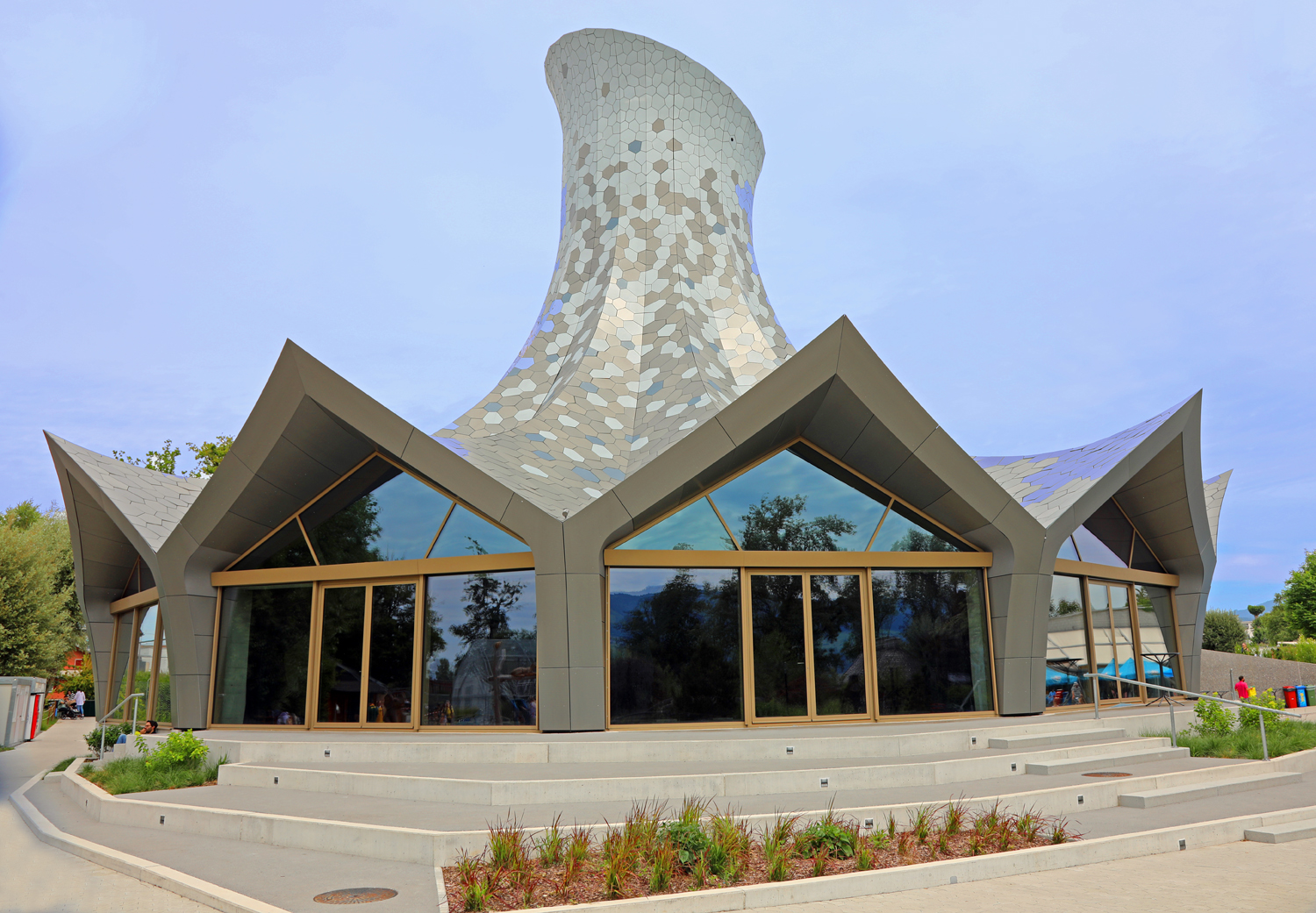
In “Knies Zauberhut”, the multi-purpose event building newly erected by the Kinderzoo, a small but choice wild bee exhibition was set up with enlarged photographs of wild bees, information boards and display cases. From spring to autumn it informs those interested about the life and death of our wild bees and, with exhibits changing every two months, puts a face to some of the species currently on the wing.
So that zoo visitors can experience in practice what they have learned in the exhibition, possible sites suitable for improvement for wild bees were identified on the zoo grounds during a site visit. Our president, the animal ecologist André Rey, drew up plans of measures for two outdoor sites to begin with, intended to support target species recorded for Rapperswil. These measures were carried out in a highly innovative way by the landscaping professional Marco Riva (Toller Unternehmungen AG).
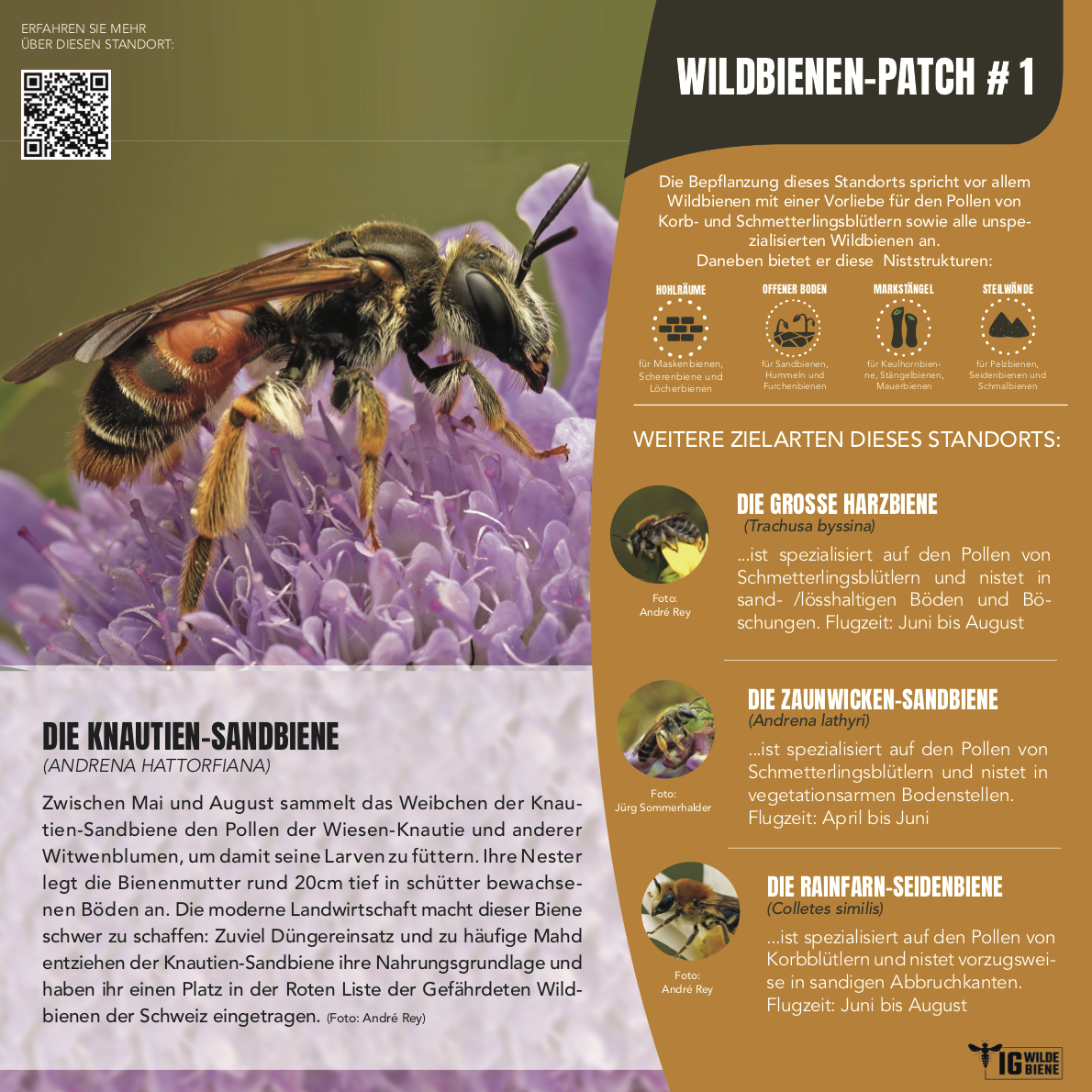
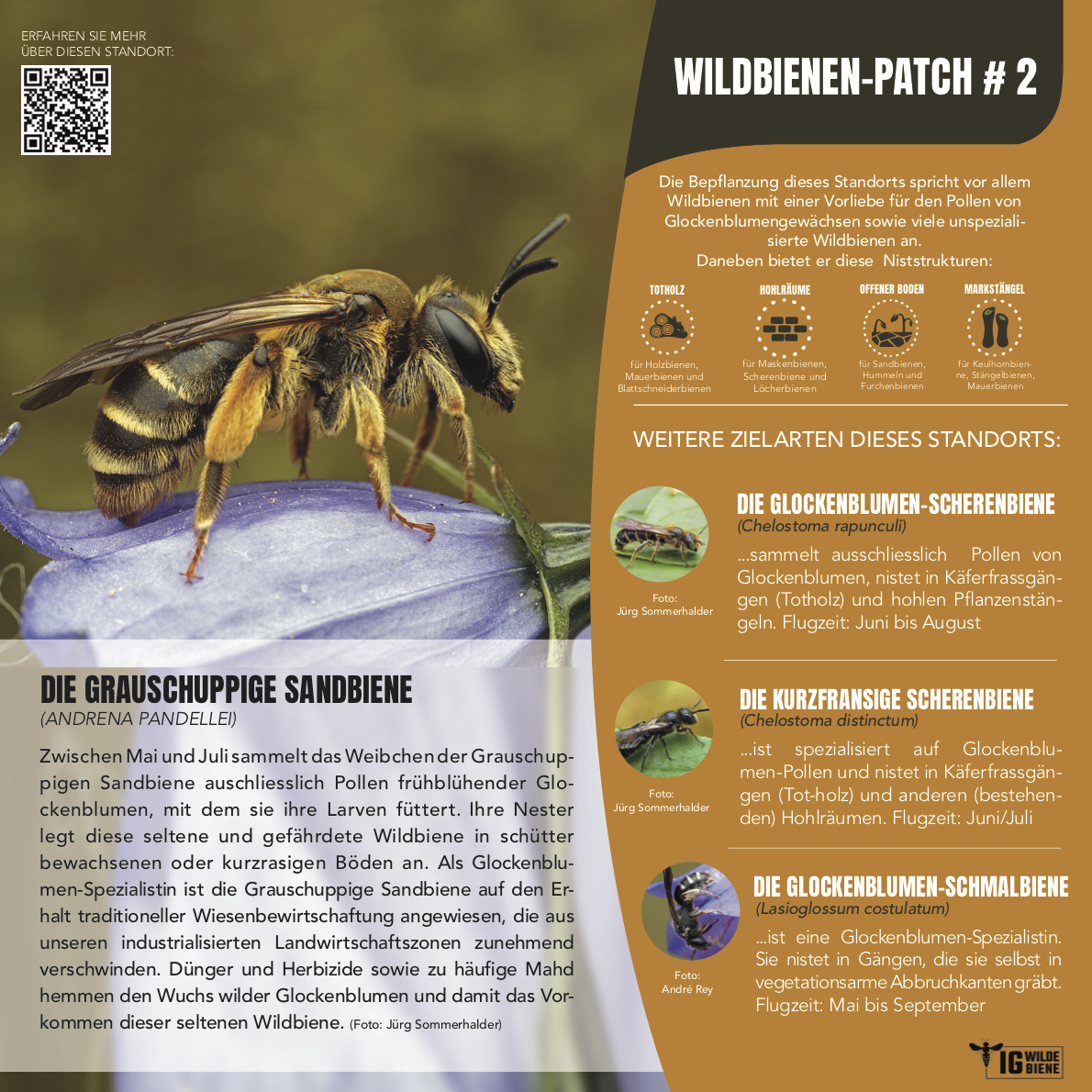
For the improved sites, IG WILDE BIENE then designed individual information boards with a short portrait of the main target species of each site. Every site board carries a QR code leading those interested to specific web pages with fuller information.
Project responsibility:
André Rey & Jürg Sommerhalder
The sites:
• Wild bee patch # 1
• Wild bee patch # 2
Client:
Knie’s Kinderzoo: wild bee patch # 1
Nesting structures:
• The loess towers appeal to species that nest in steep faces
• Heaps of sand are aimed at those that favour a sandy nesting substrate.
• Patchy areas of gravel and bare earth extend what is on offer for ground nesters.
Planting:
• Composites (Asteraceae)
• Legumes (Fabaceae)
• Teasel family (Dipsacoideae)
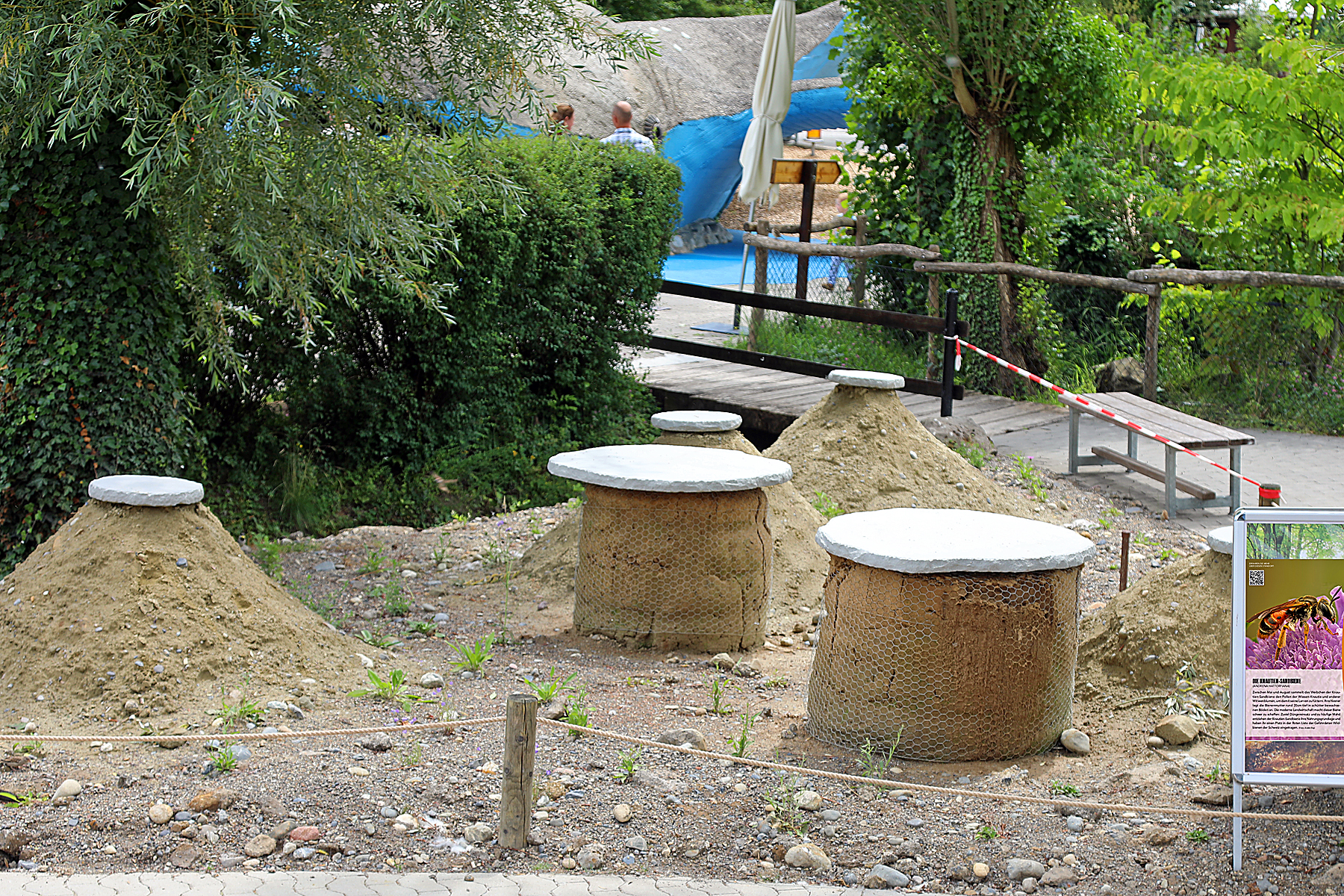
Photo: Between the loess towers and heaps of sand at this newly created site, the plants sown will grow and flower over the coming weeks.
Target species:
As the main target species of this site we have chosen the large scabious mining bee (Andrena hattorfiana). This mining bee flies between May and August in one generation and nests in level and gently sloping ground. It makes no specific demands of the substrate. A pronounced specialist of the teasel family, the large scabious mining bee collects its pollen preferably from field scabious (Knautia). Because of this demand for pollen the bee is threatened: over-fertilised meadows and pastures and too intensive a mowing regime in modern farmland are making its host plants, and with them the bee itself, ever rarer.
Female:
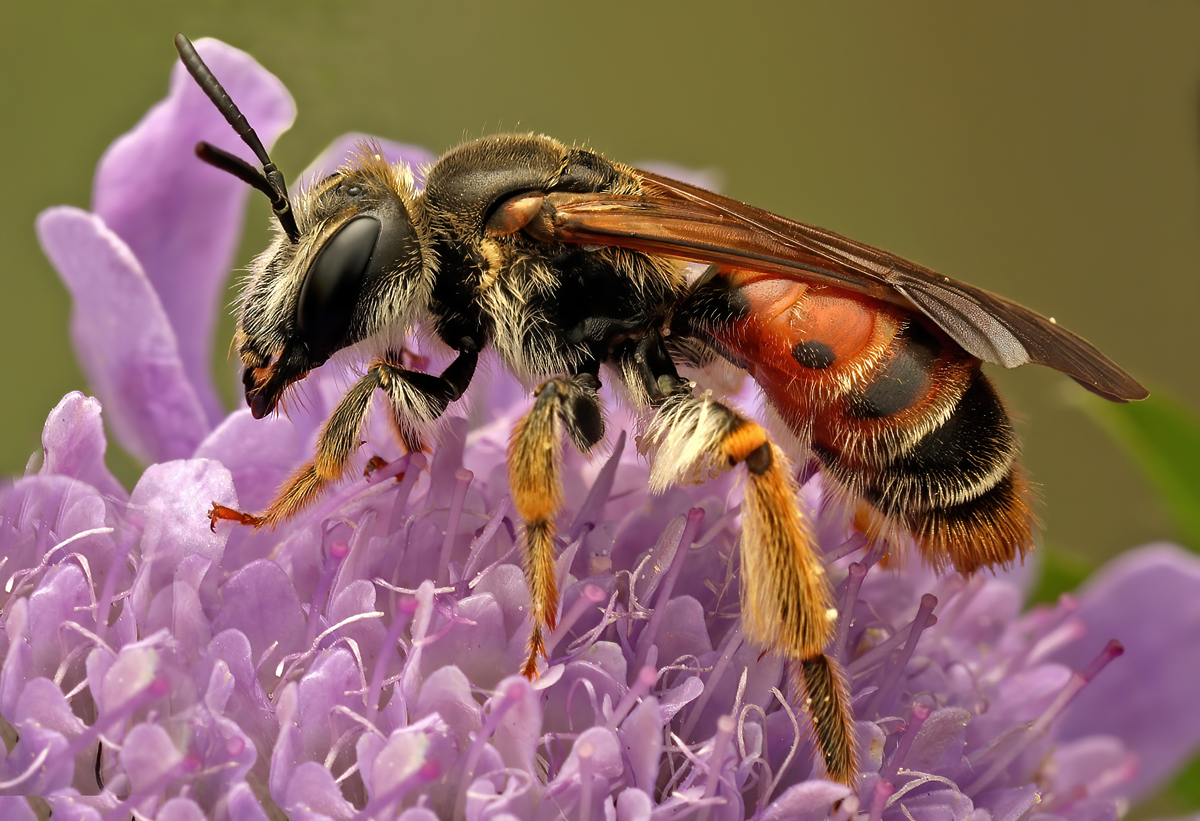
Photo: © André Rey
Male:
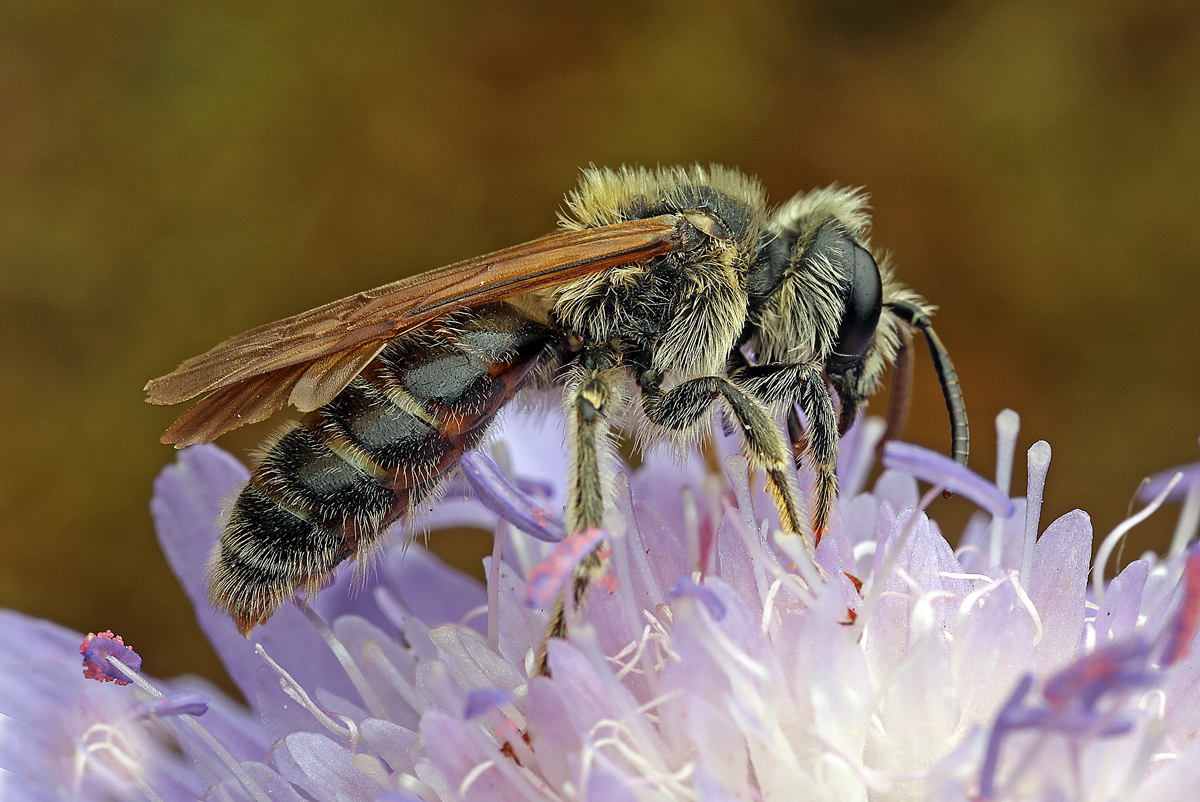
Photo: © Jürg Sommerhalder
Species at this site:
From here on we will portray wild bee species actually observed at this site.
Knie’s Kinderzoo: wild bee patch # 2
Nesting structures:
- The deadwood trunks buried here offer nesting space for species that occupy existing cavities such as beetle galleries. They are also suitable for deadwood nesters such as carpenter bees, which gnaw their own nesting cavities into the wood.
- Patchy areas of gravel and bare earth extend what is on offer for ground nesters.
Planting:
- Various bellflower species (Campanulaceae)
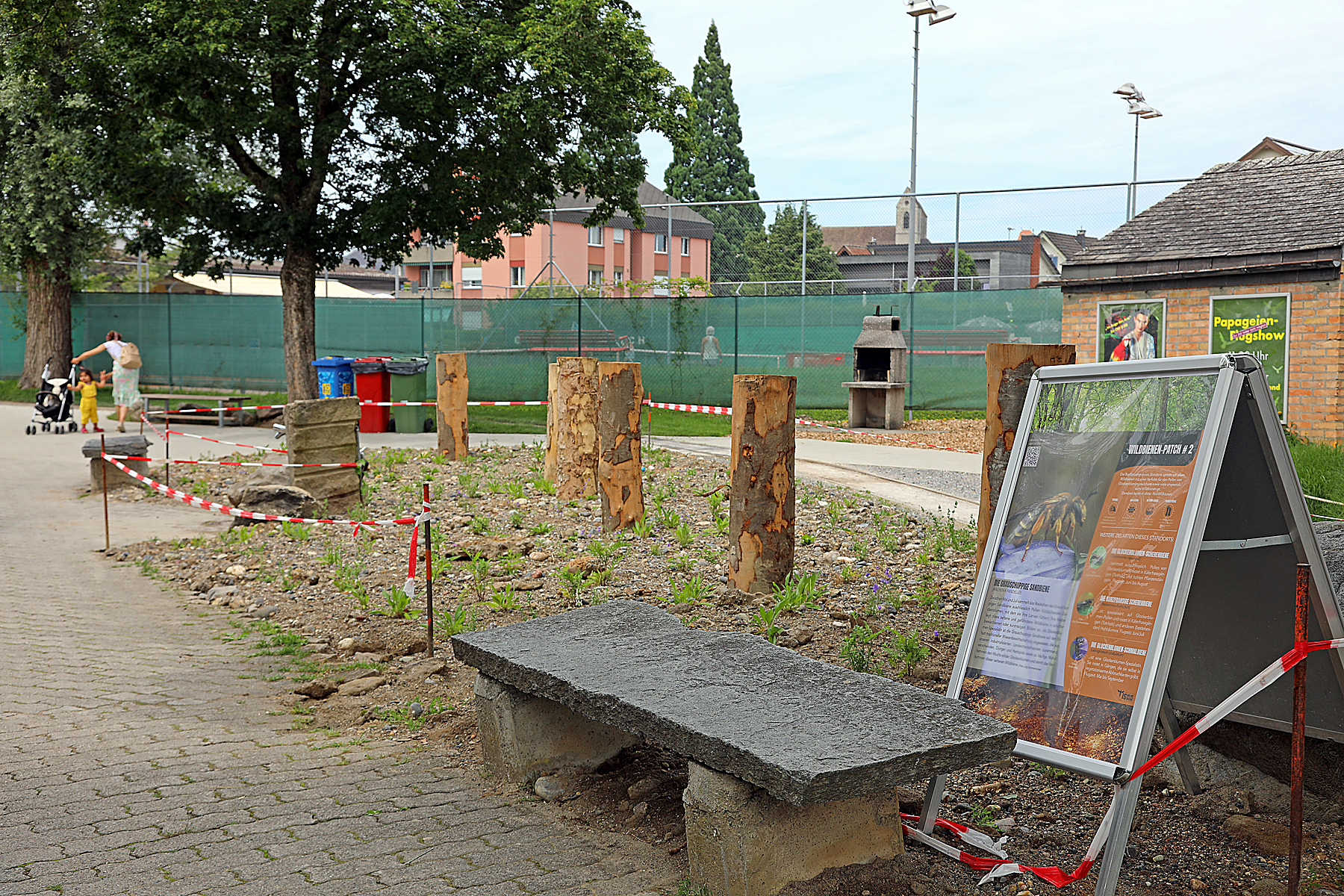
Photo: Between the deadwood trunks of this newly created site the first bellflowers are in flower. Their number will rise sharply over the coming weeks as the freshly sown and planted stock establishes itself.
Indicator species:
The grey-scaled mining bee (Andrena pandellei) is the main target species of this site. It grows to 10 or 11 mm long and, as a classic ground nester, builds its nests underground in burrows it digs itself. For this it appears to favour sparsely vegetated, sandy-loamy soils in warm south-facing positions. This wild bee is decidedly choosy about the pollen with which it feeds its larvae: from May to June the female of the grey-scaled mining bee collects exclusively from bellflowers.
To the same degree as modern agriculture relies increasingly on fertilised and closely mown fodder meadows, the species-rich, traditionally managed meadows with bellflowers are disappearing from our landscape – and with them the basis of life for this bee, which has become rare.
Female:
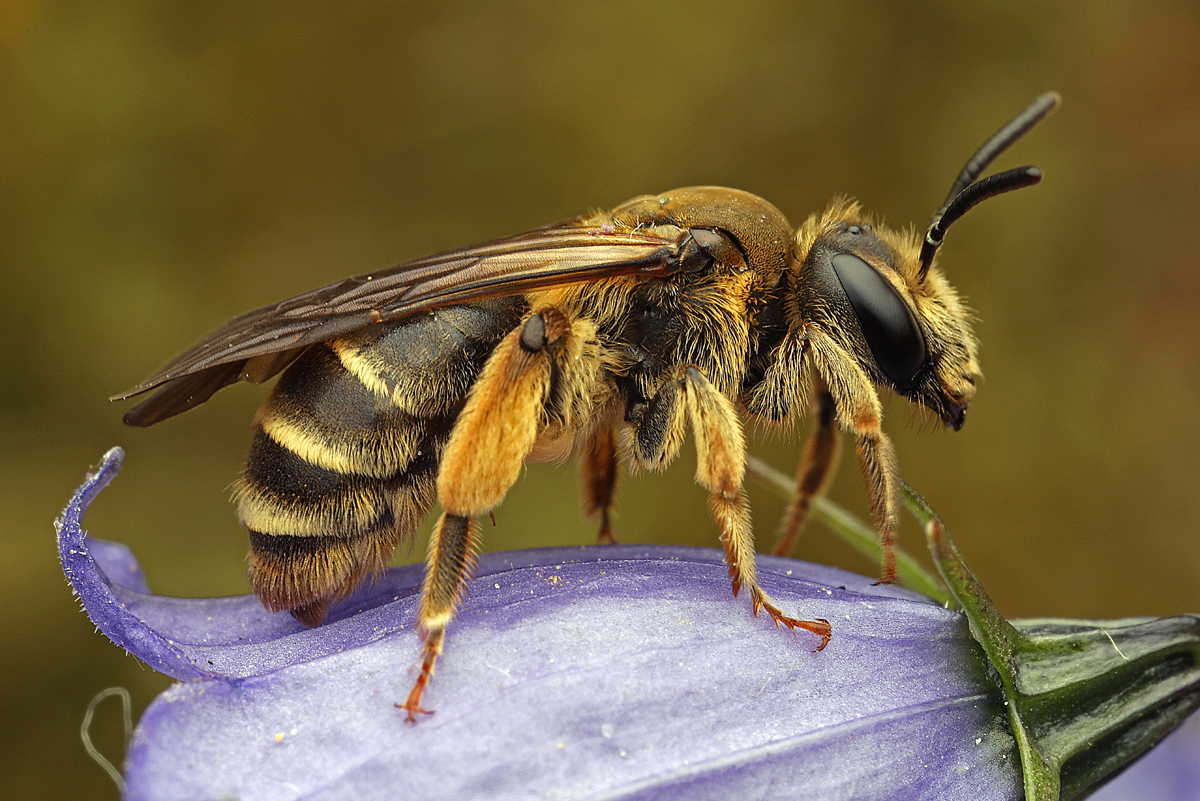
Male:
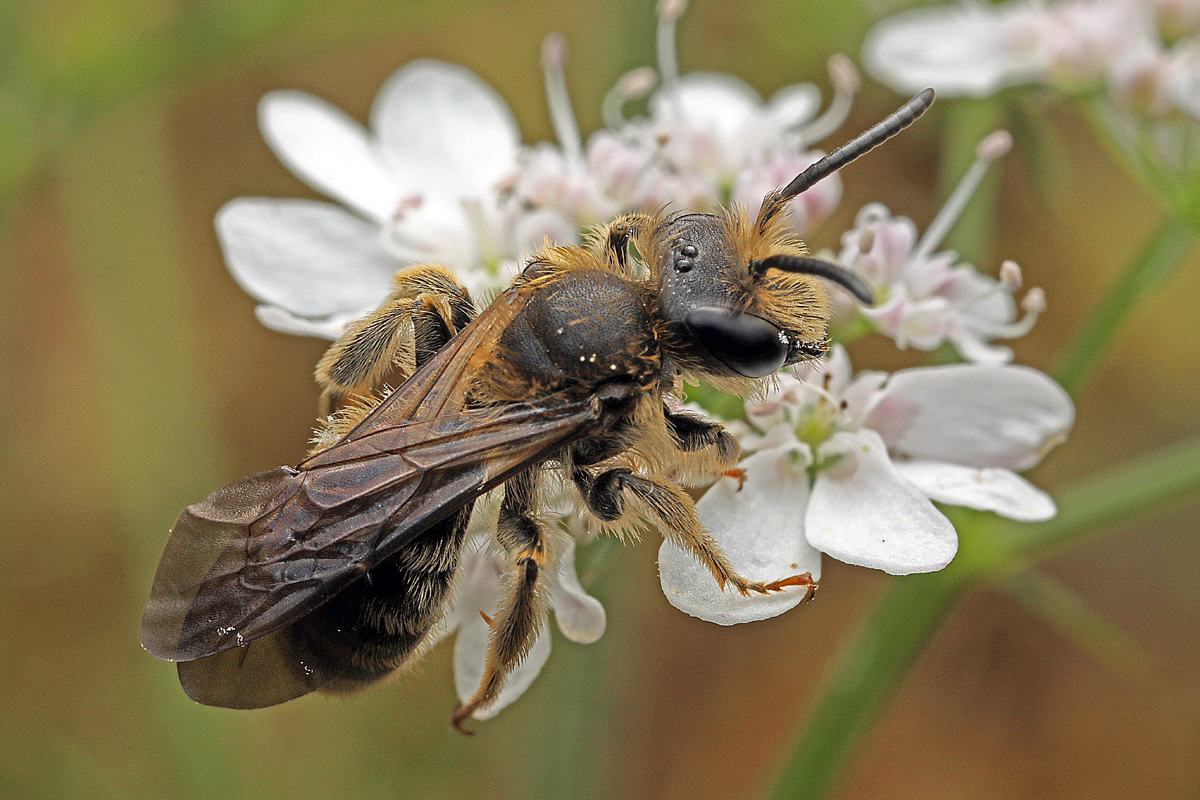
Photo: Since males collect no pollen, they are occasionally found on the “wrong” flowers too. Here a male is taking nectar from a yarrow.
Species at this site:
From here on we will portray wild bee species actually observed at this site.
All photos on this page: © Jürg Sommerhalder