
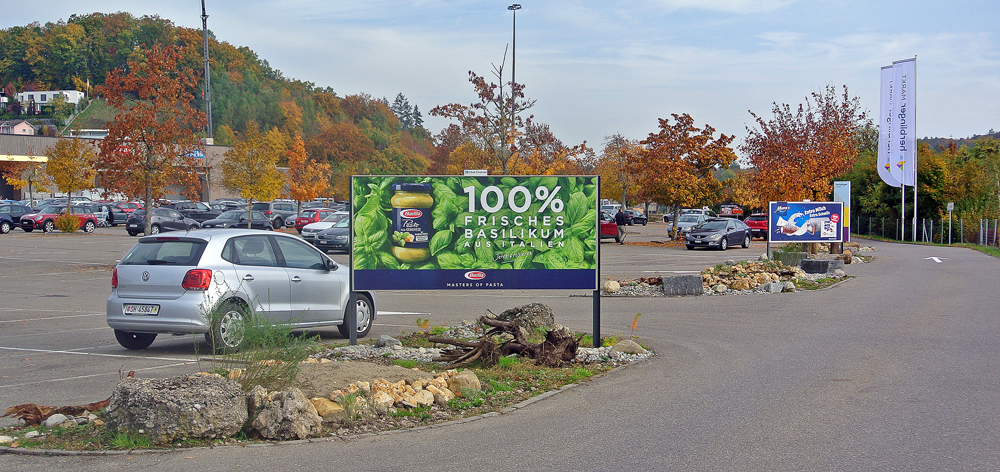
Background:
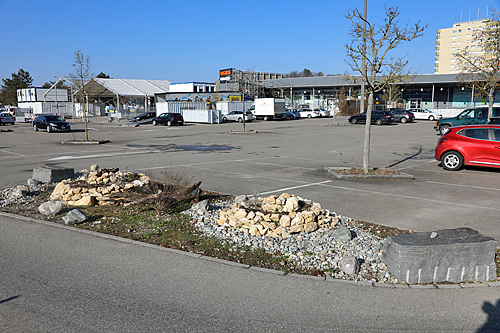
As part of the Pro Natura Schaffhausen project Diversität fördern – Vielfalt stärken, the management of the Herblinger Markt shopping centre in Schaffhausen was won over to improving the car park area ecologically. During the refurbishment of the shopping centre, nine patches at the edge of the car park were identified and improved ecologically with a focus on wild bees.
IG Wilde Biene was asked to support this sub-project in whatever form it wished.
The contribution of IG Wilde Biene:
We analysed the 9 sites during a site visit and defined, for each one, an indicator species possible given the nesting structures present. For all the sites we then designed individual information boards with a short portrait of the site and of the indicator species defined, and so created a small wild bee trail on the car park of the Herblinger Markt.
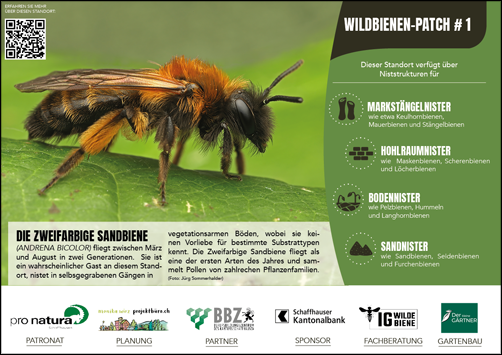
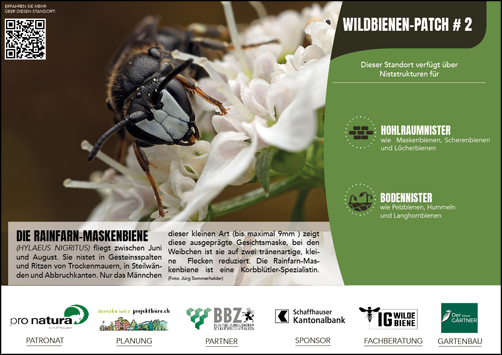
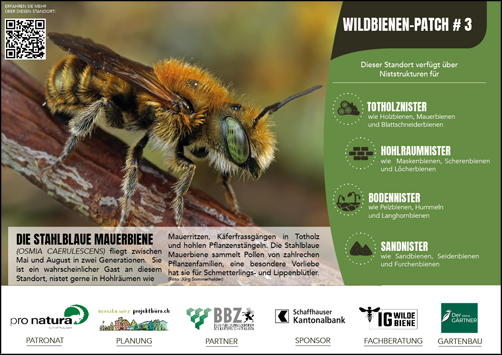
We are moreover responsible for a large wild bee information banner in world format (F12), which is mounted at the site, and contribute half a dozen slides shown on the new, solar-powered information screen in the shopping centre to draw attention to the wild bee trail on the car park.
Project responsibility: Jürg Sommerhalder
The sites:
• Wild bee patch # 1
• Wild bee patch # 2
• Wild bee patch # 3
• Wild bee patch # 4
• Wild bee patch # 5: flowering area without specific nesting structures
• Wild bee patch # 6: flowering area without specific nesting structures
• Wild bee patch # 7
• Wild bee patch # 8
• Wild bee patch # 9
Clients:
Herblinger Markt: wild bee patch # 1
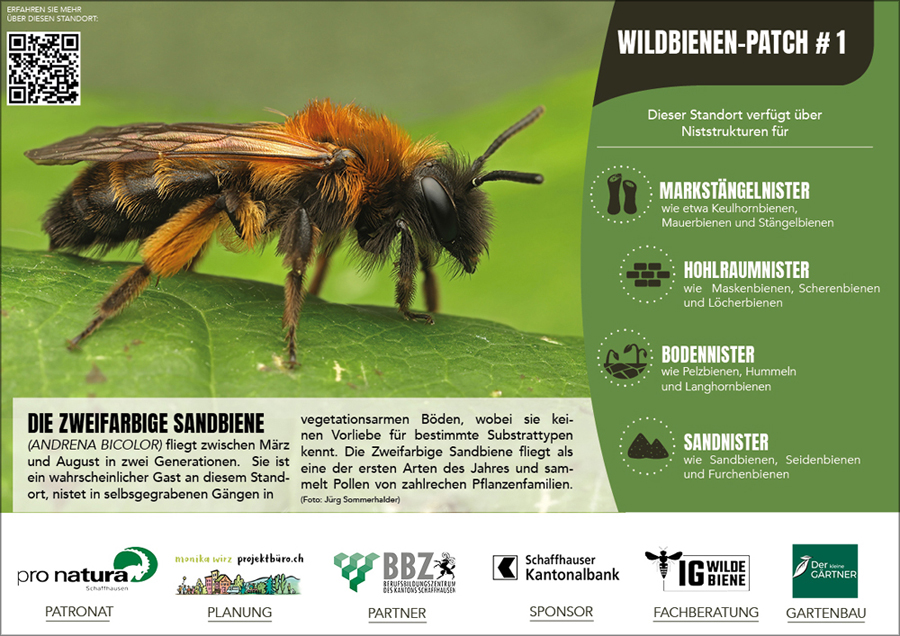
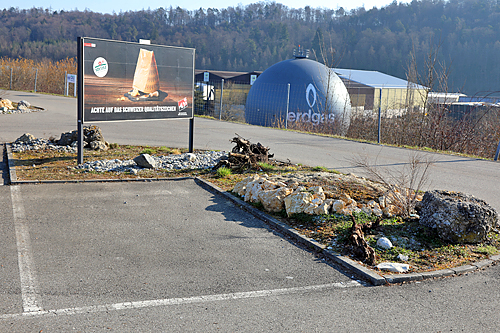
Nesting structures present:
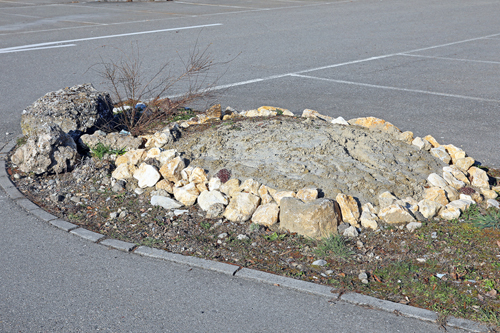
• The sand lens laid down here offers space for ground nesters, especially those with a preference for sand.
• Alongside it, cavity nesters find space between the stones edging the sand lens.
• Patchy areas of gravel and bare earth extend what is on offer for ground nesters.
• The dead root stock is intended for nesters in dead and rotting wood.
• Wild perennials also create nest sites for species nesting in pithy stems.
Indicator species:
As the indicator species of this site we have chosen the grey-gastered mining bee (Andrena bicolor). This pretty little mining bee is a classic ground nester with no specific demands of the substrate. As one of the first species on the wing in the bee year, it can be observed on the first warm days of February. It is not choosy about nectar and pollen; so early in the year, when there are still few flowers, it is often seen on coltsfoot (Tussilago farfara).
Female:

Male:

Species at this site:
Here we will list wild bee species that can actually be observed at this site in the summer of 2021.
All photos on this page: © Jürg Sommerhalder
Herblinger Markt: wild bee patch # 2
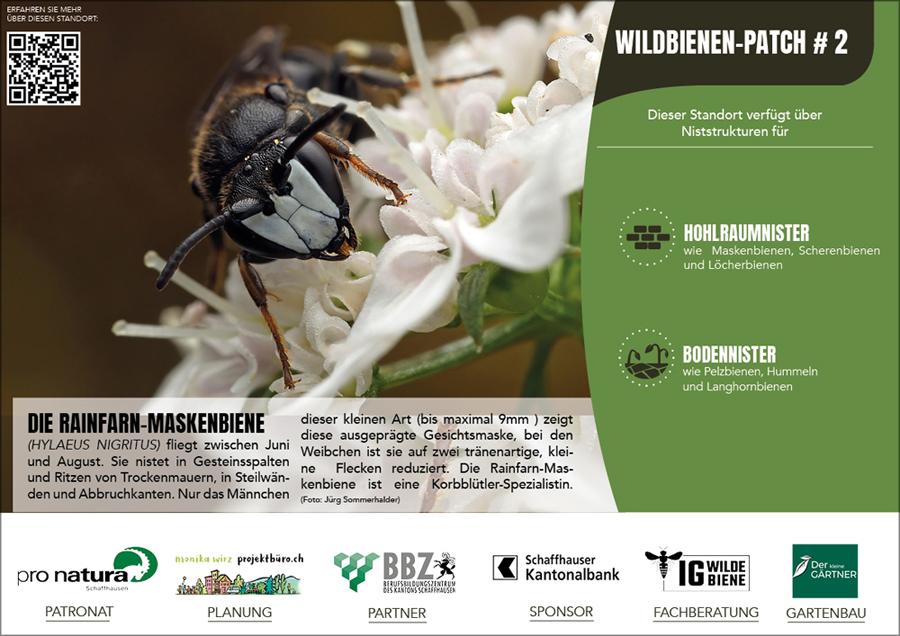
Nesting structures present:
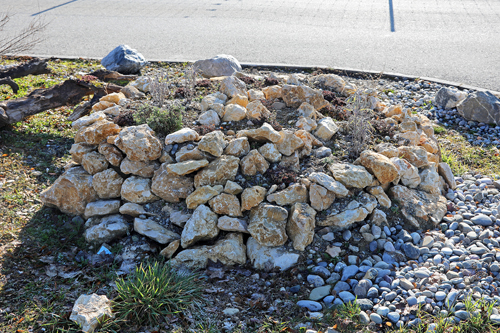
• Two dry-stone spirals offer cavity nesters space to build their nests.
• Patchy areas of sand, gravel and bare earth extend what is on offer for various ground nesters.
• Dead root stocks are intended to appeal to nesters in dead and rotting wood.
• Wild perennials create nest sites for species nesting in pithy stems.
Indicator species:
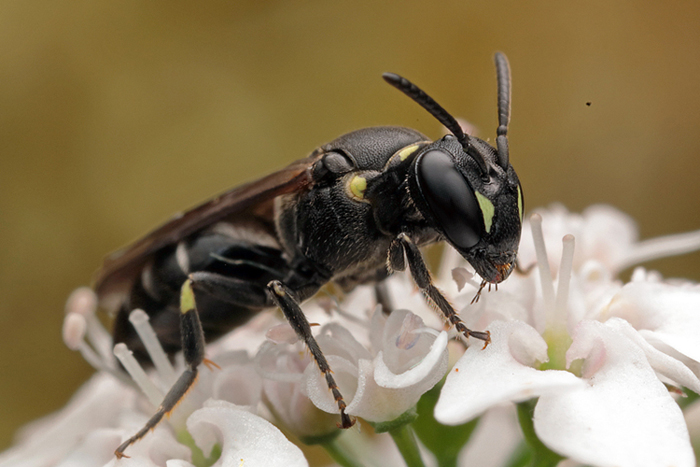
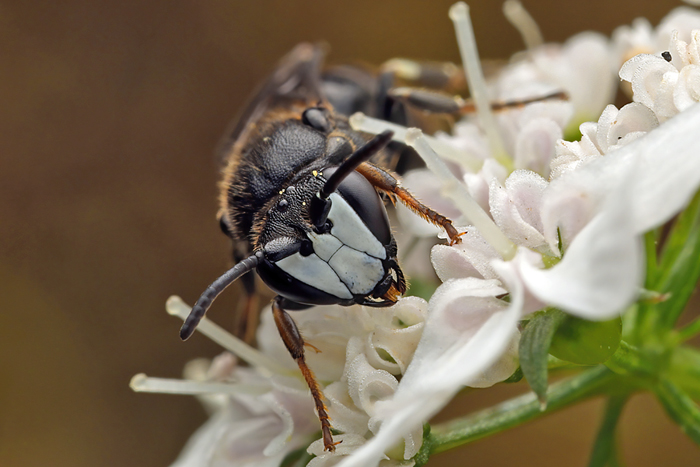
The large yellow-face bee (Hylaeus nigritus) is the indicator species of this site. The male shows a pronounced ivory-coloured facial mask, which in the female is only hinted at in the form of two triangular yellow marks between the eyes. The gaps in the stone spirals at this site are ideal nest sites for this small wild bee. It collects the pollen for rearing its offspring between June and August exclusively from composites, developing a particular preference for tansy (Tanacetum vulgare). Nectar, by contrast, it drinks – like many other wild bees – from various plant families.
Female:
Male:
Species at this site:
Here we will list wild bee species that can actually be observed at this site in the summer of 2021.
All photos on this page: © Jürg Sommerhalder
Herblinger Markt: wild bee patch # 3
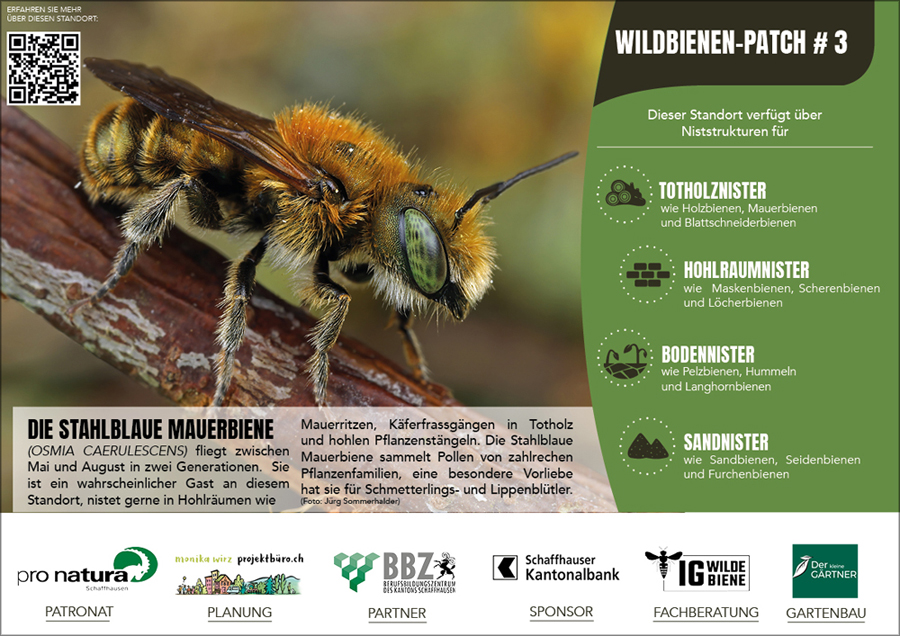
Nesting structures present:
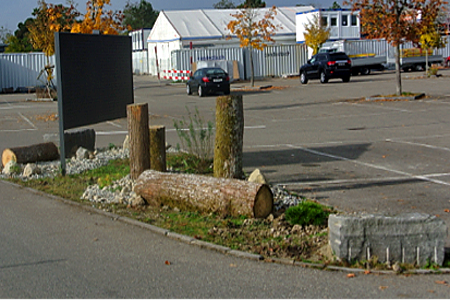
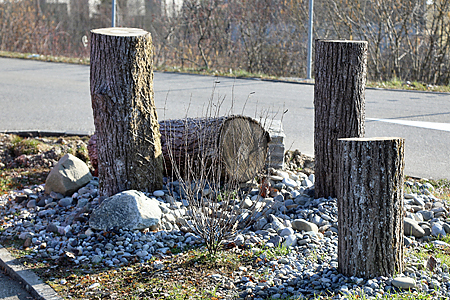
• Standing and lying deadwood trunks are on offer to deadwood nesters that gnaw brood cavities into the wood.
• With their beetle galleries and bark crevices, the trunks also appeal to cavity nesters.
• Patchy areas of sand, gravel and bare earth extend what is on offer for various ground nesters.
• Wild perennials create nest sites for species nesting in pithy stems.
Indicator species:
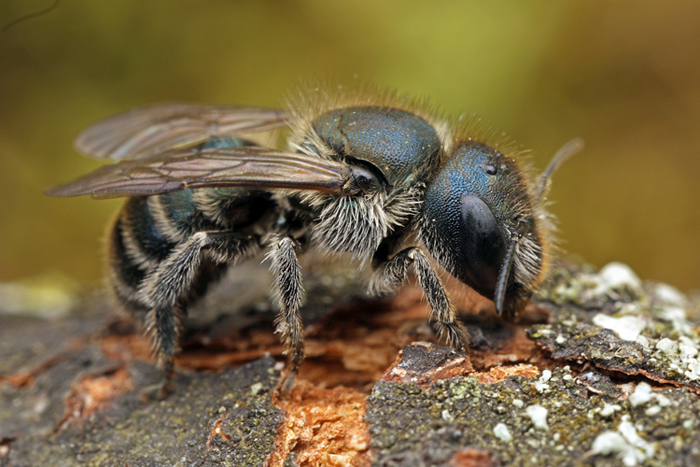
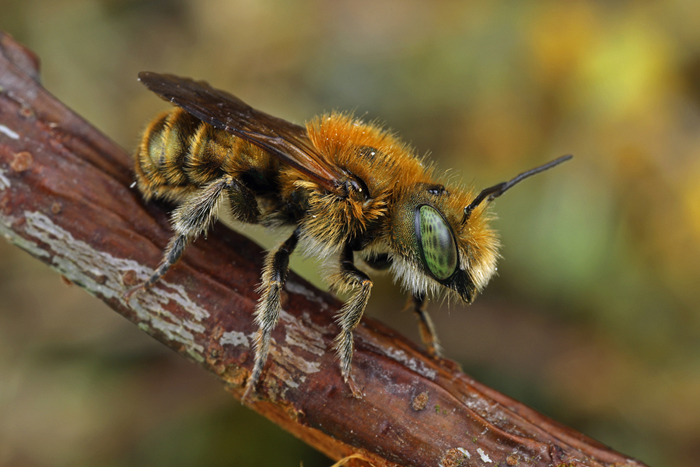
The blue mason bee (Osmia caerulescens) is the indicator species of this site. The female accounts for the German name with its metallic blue colouring, while the male shines a more greenish metallic and stands out through its foxy-red coat. The flight period of this species lasts from May to August, with a partial second generation on the wing from July. The female uses beetle galleries and abandoned brood cavities of other bees in deadwood as nest sites, but is also content with alternative existing cavities such as pithy stems and crevices in walls. As for pollen, this mason bee is an all-rounder, though it has a clear preference for legumes and the mint family (Fabaceae and Lamiaceae).
Female:
Male:
Species at this site:
Here we will list wild bee species that can actually be observed at this site in the summer of 2021.
All photos on this page: © Jürg Sommerhalder
Herblinger Markt: wild bee patch # 4
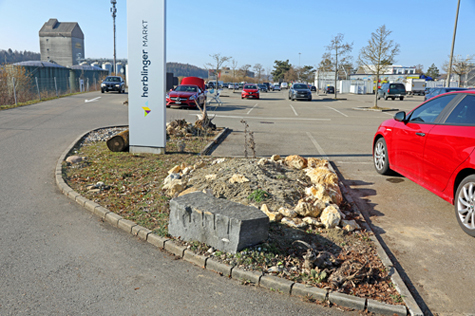
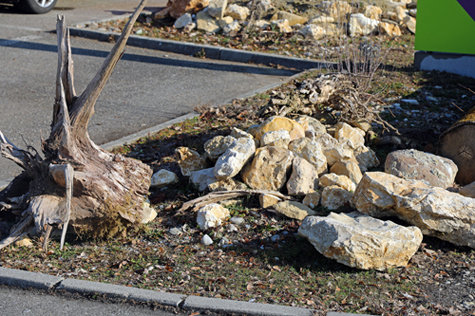
Nesting structures present:
• A deadwood trunk and a root stock are on offer to nesters in rotting and dead wood.
• A sand lens is available to ground nesters.
• Patchy areas of gravel and bare earth extend what is on offer for various ground nesters.
• Wild perennials create nest sites for species nesting in pithy stems.
Indicator species:
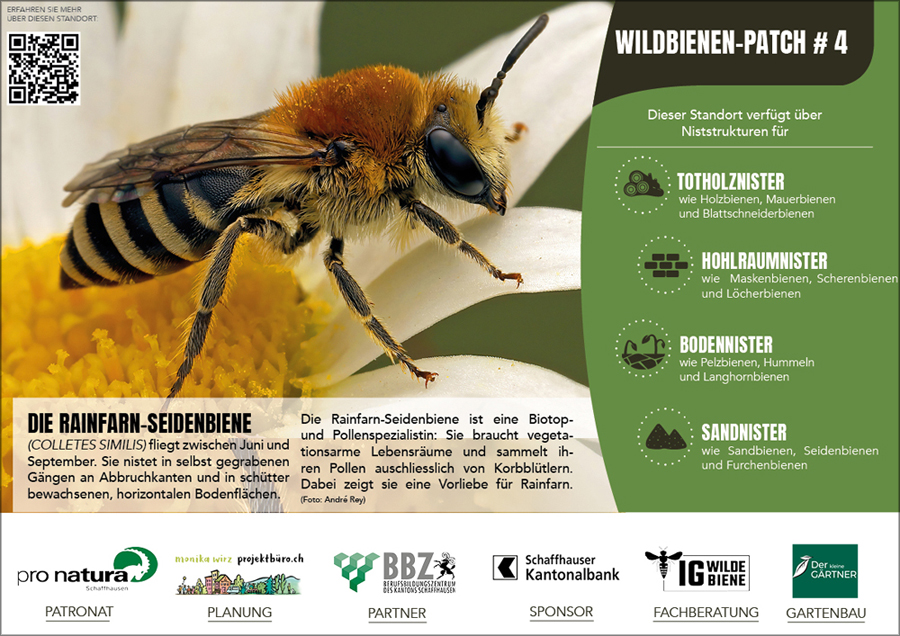
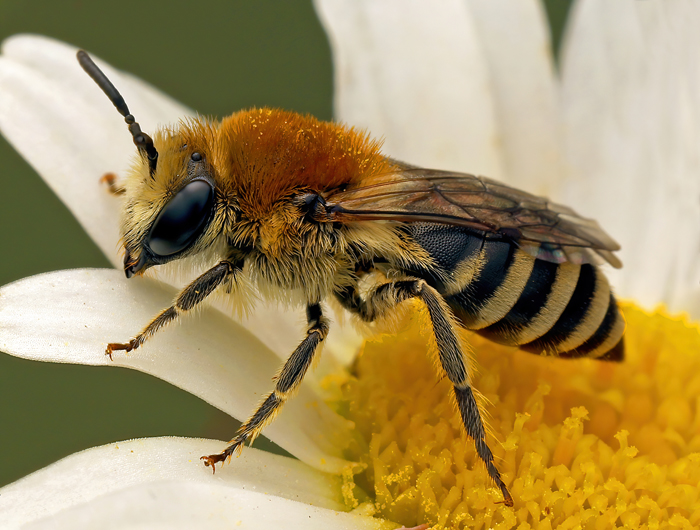
The bare-saddled colletes (Colletes similis) is the indicator species of this site. It readily settles habitats with sparse vegetation and easily accessible, open ground. A ground nester, it digs burrows in earth banks, steep faces and level ground in which to build its nests. The brood cells are given – nomen est omen – a silky lining, which the females additionally impregnate with a secretion. This protects their larvae from attack by bacteria and fungi. As its German name further suggests, this wild bee collects pollen preferably from tansy, though it does not spurn other composites either.
Female:
Species at this site:
Here we will list wild bee species that can actually be observed at this site in the summer of 2021.
All photos on this page: © André Rey
Herblinger Markt: wild bee patch # 7
Nesting structures present:
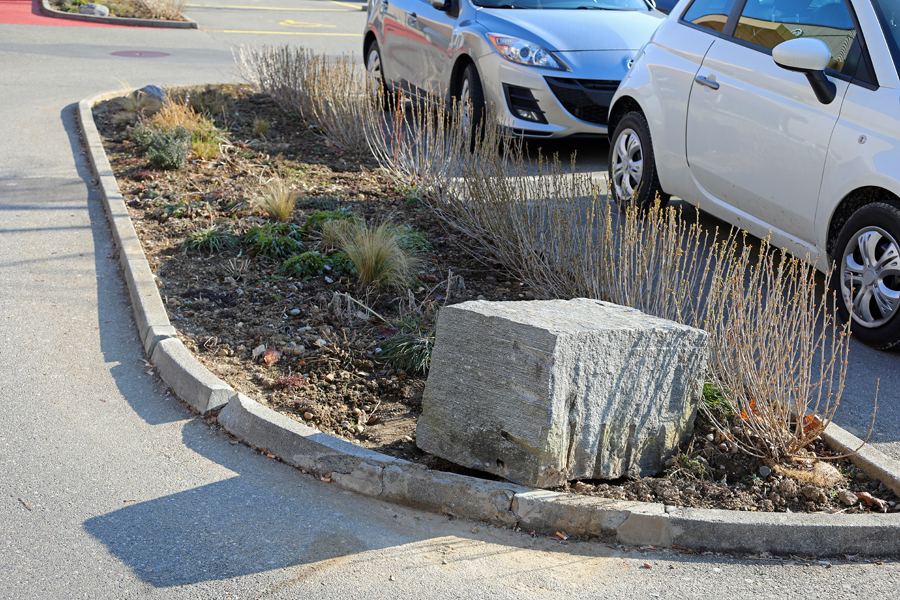
• Patchy areas of gravel and bare earth are on offer to various ground nesters.
• Plants with pithy stems create nest sites for species nesting in such stems.
Indicator species:
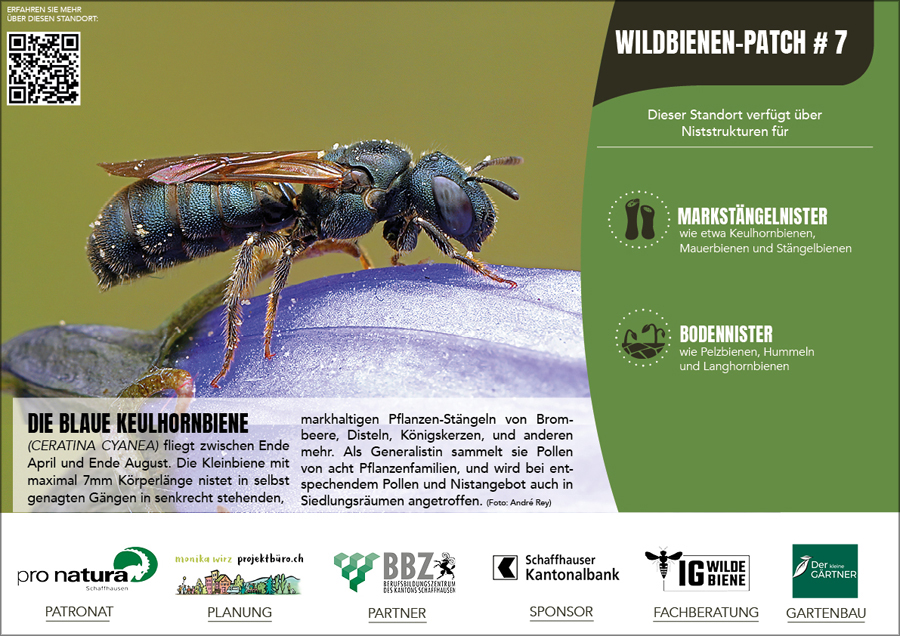
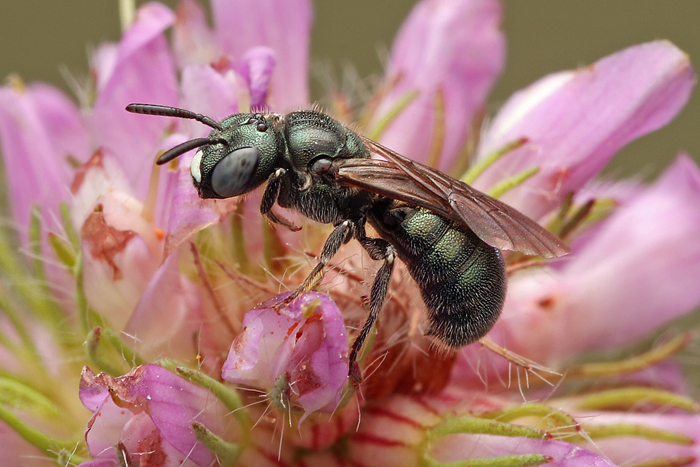
The small carpenter bee (Ceratina cyanea) is the indicator species of this site. At a maximum body length of 7 mm it is a tiny thing. The male is marked by a white facial spot, which is usually absent in the female. Ceratina cyanea nests in pithy stems: the females gnaw deep burrows into the pith of vertical or gently sloping broken stems and shoots of bramble, of thistles, mulleins and elder. Stems of bellflower and mignonette also attract the attention of nesting females. In the burrows they gnaw out, they build several brood cells one behind the other (a linear nest), each separated from the next by a plug of the pith gnawed out. The females are very caring and long-lived mothers: they guard and defend their nests (against wasps and ants, for instance, using a defensive secretion as well) until their offspring leave the nursery as fully formed bees.
As for the pollen used to feed her offspring, the small carpenter bee is an opportunist: numerous flowers from at least eight plant families have already been recorded for it.
Female:
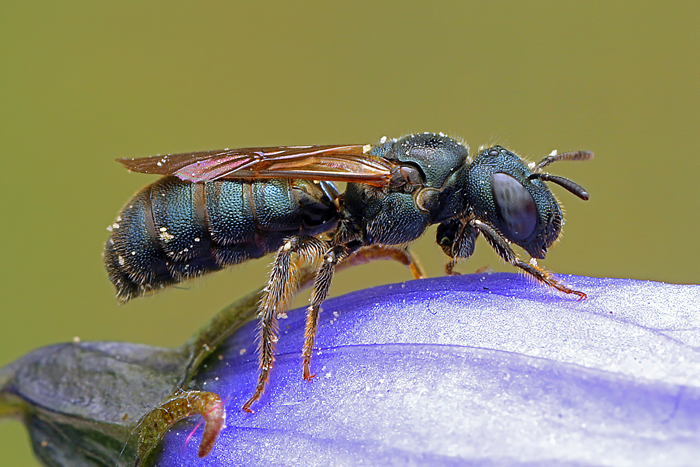
Male:
Species at this site:
Here we will list wild bee species that can actually be observed at this site in the summer of 2021.
All photos on this page: © André Rey
Herblinger Markt: wild bee patch # 8
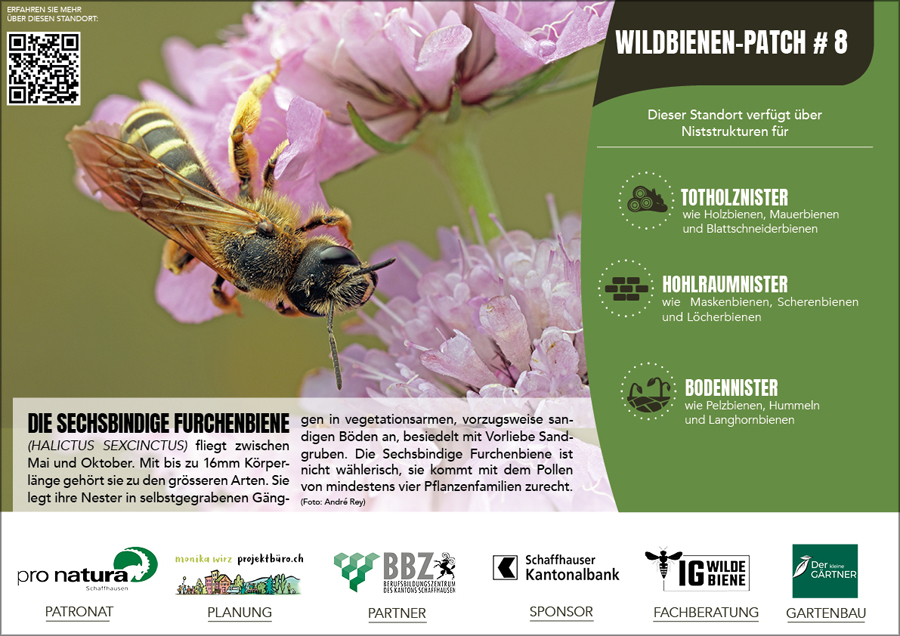
Nesting structures present:
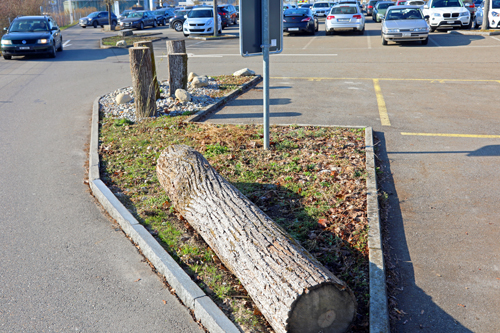
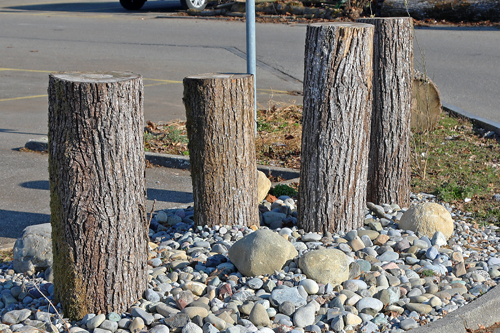
• Patchy areas of sand, gravel and bare earth are on offer to various ground nesters.
• Deadwood standing and lying appeals to nesters in rotting and dead wood as much as to cavity nesters.
Indicator species:
At up to 16 mm in body length, the six-banded furrow bee (Halictus sexcinctus) reaches roughly the size of a honey bee. It is a ground nester and settles by preference in habitats with sandy or loess soil. In these it digs burrows in which to build its nests. Although it is a solitary bee, it often lives in larger colonies, and it can even happen that two or more females use the same brood burrow.
The long-lived females emerge in high summer and mate. Unlike the males, which die in autumn, the females overwinter and nest only in the following year.
As for the pollen used to feed its offspring, the six-banded furrow bee is not particularly choosy: numerous flowers from at least four plant families have been recorded for it.
Female:

Male:
to follow
Species at this site:
Here we will list wild bee species that can actually be observed at this site in the summer of 2021.
All photos on this page: © André Rey
Herblinger Markt: wild bee patch # 9
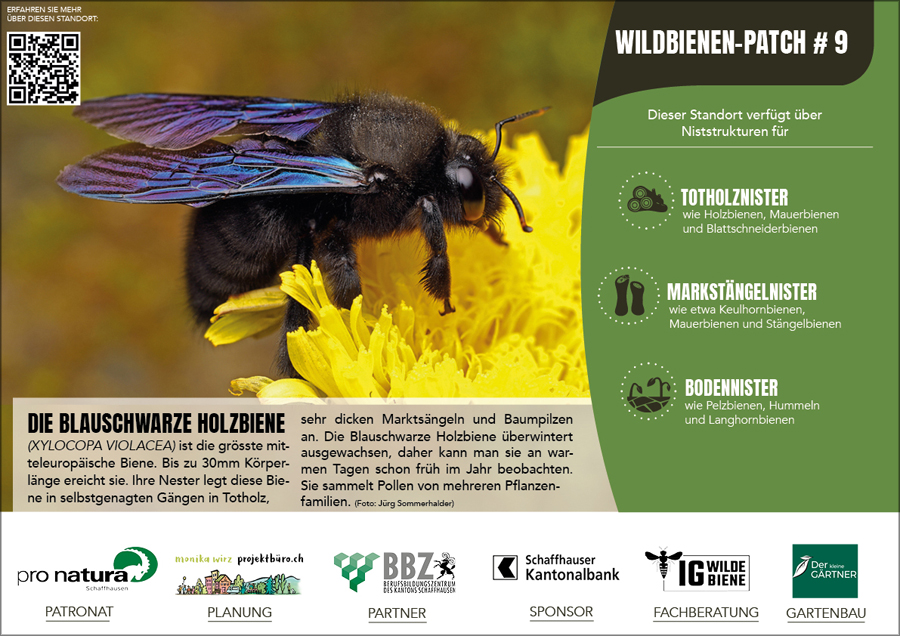
Nesting structures present:
• Sparsely vegetated areas of gravel and bare earth are aimed at ground nesters.
• Deadwood appeals to nesters in rotting and dead wood as much as to cavity nesters.
• A heap of branches offers nesting opportunities for species nesting in pithy stems.
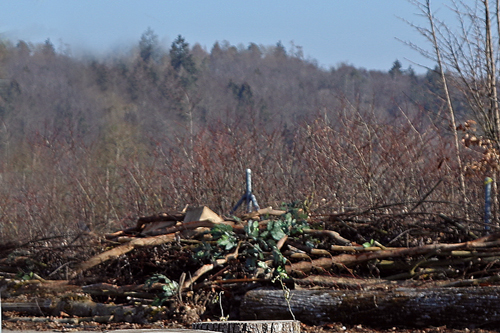
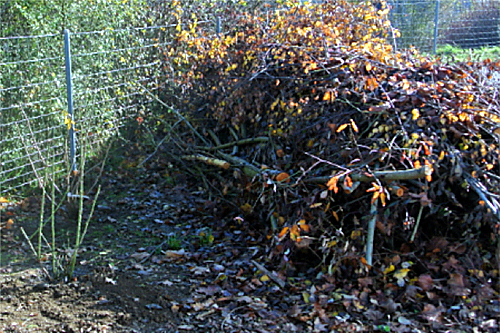
Indicator species:
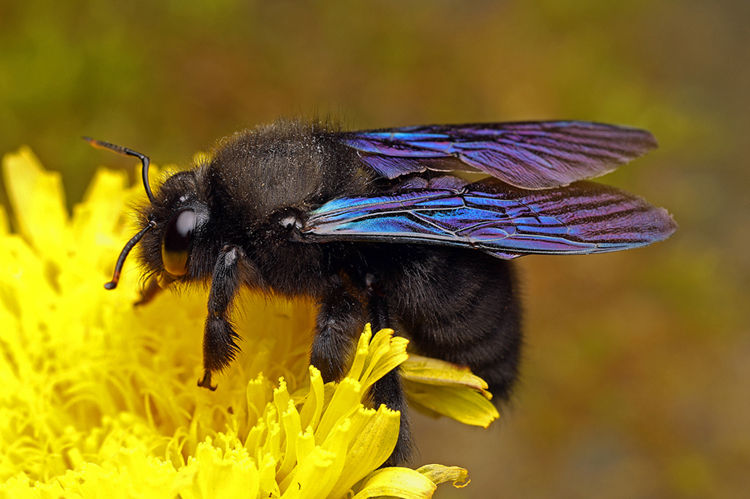
The violet carpenter bee (Xylocopa violacea) is the indicator species of this site. It is entirely black, though depending on the light its wings shine deep blue. At up to 30 mm in body length it is one of the largest wild bees in central Europe. A feature typical of the species is two orange segments shortly before the end of the male’s antennae.
The female gnaws its brood cavities into rotting or white-rotted deadwood, occasionally also into bracket fungi. It also manages with very thick plant stems, however: in Italy nests have been recorded in stems of Arundo donax (giant reed), a non-native plant also widespread here.
In burrows 30 to 40 cm long the female builds up to 15 brood cells, furnishing each with a huge egg up to 11 mm long.
The violet carpenter bee is a very agile and enduring flier that makes far-reaching flights to collect pollen. Although it develops a clear preference for legumes, it also collects the pollen of other plant families such as the mint family, composites and the borage family. The new generation, emerging in August, flies into October, then overwinters and can often be observed on warm days as early as the following February.
Female:
Male:
Species at this site:
Here we will list wild bee species that can actually be observed at this site in the summer of 2021.
All photos on this page: © Jürg Sommerhalder