
Project lead: André Rey
Background
The large scissor bee (Chelostoma grande), classed as vulnerable (VU) and extremely rare north of the Alps, still occurs in Beckenried – though probably in a small and isolated population. A conservation project running from 2025 to 2028 is to support the species specifically. It nests in deadwood – along structurally rich, sunlit forest edges, for instance – and collects pollen from scabious on the adjoining extensively managed dry meadows. Further target species belonging to the same ecological group, and benefiting from the same measures, are two species likewise classed as near threatened (NT): the large scabious mining bee (Andrena hattorfiana) and the wood-carving leafcutter bee (Megachile ligniseca).
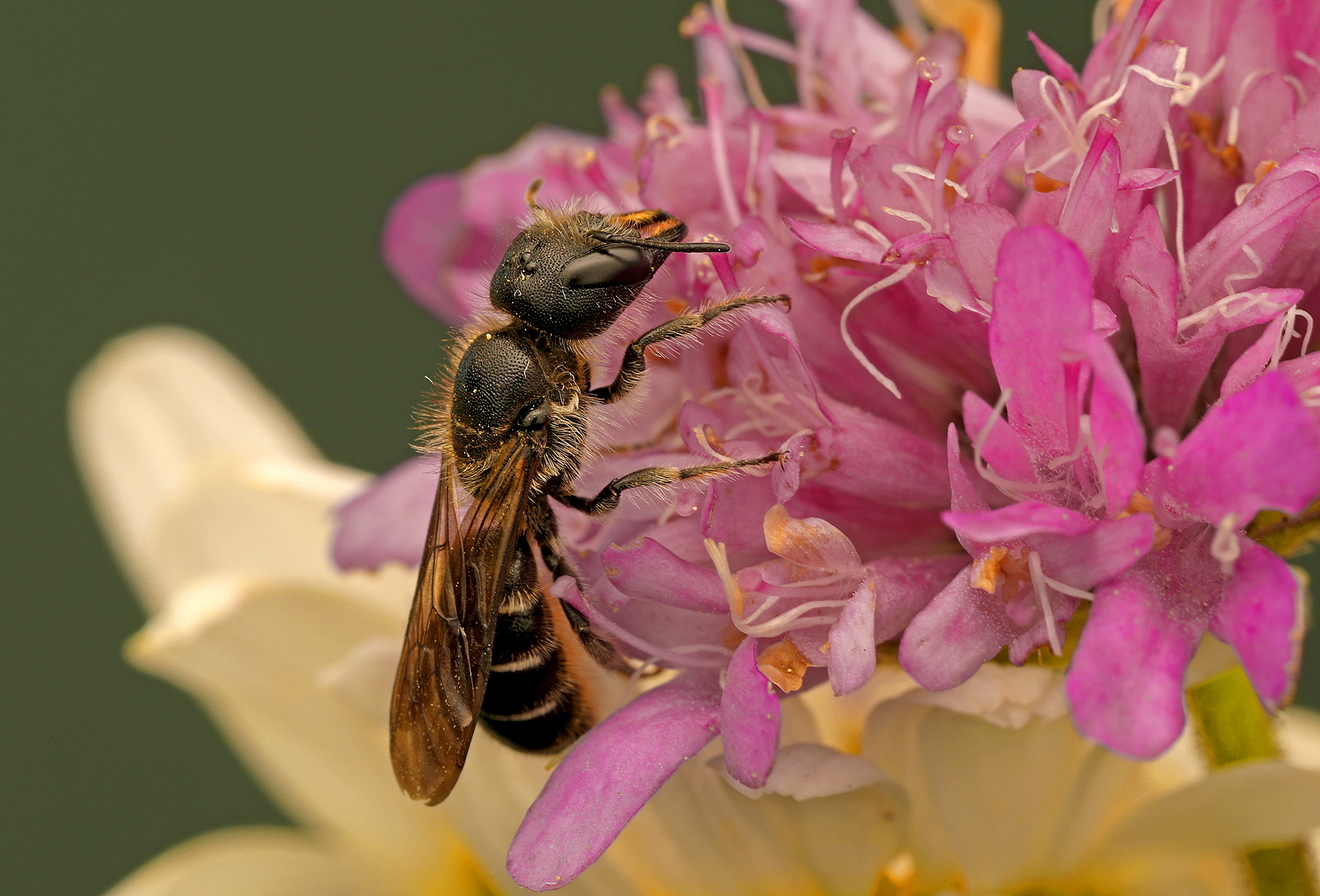
Photo: The female of the large scissor bee (Chelostoma grande) on a scabious flower, its exclusive source of pollen (photo: © André Rey).
The project area lies on the north-west-facing slope above the village of Beckenried, on the uphill side of the motorway, at altitudes between 500 and 1000 metres above sea level. The landscape is characterised by a mosaic of hedges, woodland and grassland. Extensively managed grassland occurs mainly in mesic and moist forms. The measures envisaged are, on the one hand, encouraging meadows with good stands of scabious that flower throughout the flight period of the target species (optimising mowing dates), and on the other hand improving forest edges by promoting sunlit deadwood.
Project aim
The aim of the project is to secure the survival of the main target species in the area in the long term and to help it spread beyond the isolated relict population. Alongside this, other protected species occurring in the area are to be supported.
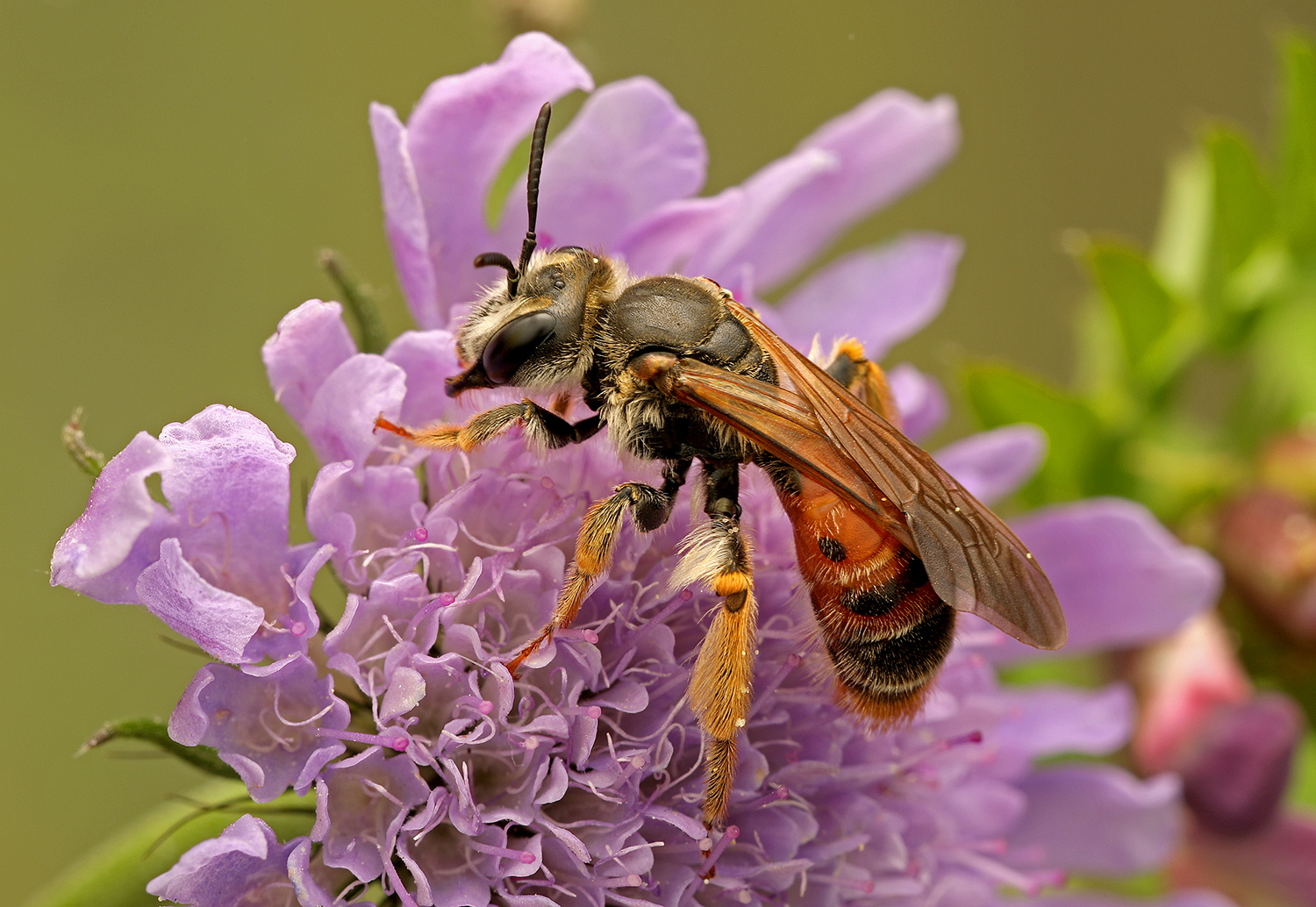
Photo: The large scabious mining bee (Andrena hattorfiana) likewise prefers hot, dry wildflower meadows and collects pollen from scabious (photo: © André Rey).
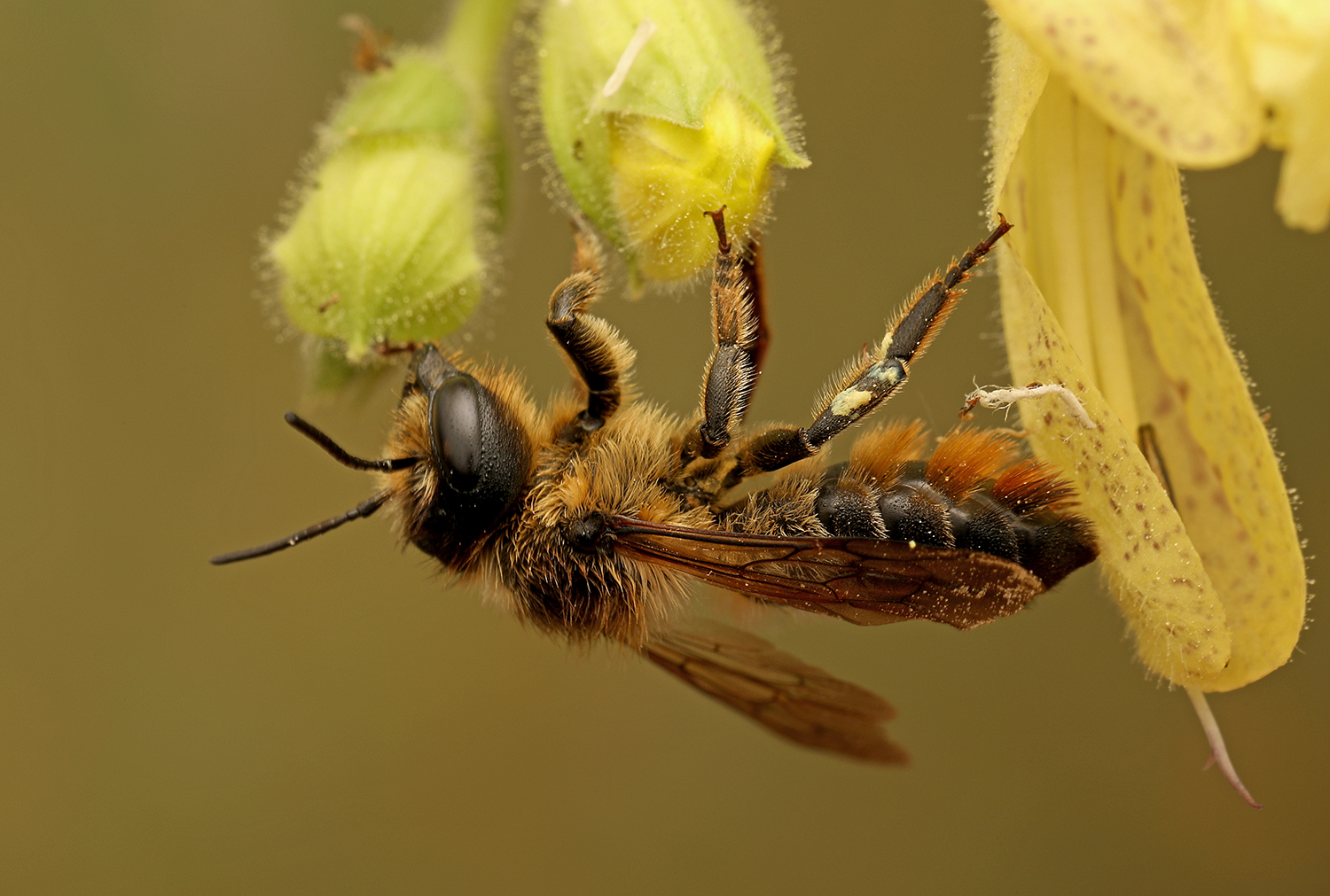
Photo: The wood-carving leafcutter bee (Megachile ligniseca), itself a deadwood nester, can also be found along forest edges. It collects pollen from the flowers of several plant families, scabious among them (photo: © André Rey).
Results 2025
In 2025 the presence of the main target species was confirmed through further surveys.
Funding
This project is supported by the Canton of Nidwalden. The search for further funding for the project is ongoing.